Comment comparer les devis de moulage par injection comme un pro
Lorsque vous comparez les devis de différents fabricants de moules d'injection, examinez, outre le prix, le périmètre indiqué, l'hypothèse de durée de vie de l'outillage et le plan d'échantillonnage.
Un comparatif de devis de moules d'injection pertinent met en relation tous les fournisseurs sur la même base : même version de plan, même résine, même volume annuel, même plan d'empreintes, même objectif de qualité et même échéance de livraison. Choisissez le plan d'outillage dont le prix est lié à des exigences de production stables et à des livrables documentés.
Pourquoi les devis pour le moulage par injection varient-ils autant ?
Un devis pour un moule d'injection tient compte des choix d'ingénierie et du temps d'usinage. Avant de comparer les prix, demandez à chaque fournisseur de préciser les hypothèses qui sous-tendent son tarif. Un devis basé sur un moule à une seule cavité, un système à canaux froids simple et une durée de vie limitée correspond à un projet différent de celui d'un moule à canaux chauds multicavités destiné à la production en continu.
Portée, hypothèses et volume de production
Fournissez à chaque fournisseur le même fichier 3D de la pièce, le dessin 2D, la qualité de la résine, la couleur, la demande annuelle et les exigences d'emballage. Demandez si le prix inclut l'analyse DFM, l'analyse Moldflow, la certification de l'acier, le moulage d'essai, les rapports d'inspection, les pièces d'usure de rechange et le transport.
Consignez le nombre de tirs prévu et la taille de la presse. Le coût d'un moule prototype diffère de celui d'un outil de production conçu pour des centaines de milliers de cycles.
Structure du moule et complexité des pièces
Les lignes de joint, les angles de dépouille, l'épaisseur des parois, les contre-dépouilles, les filetages et l'état de surface influent sur le devis d'outillage. Les coulisseaux, les éjecteurs, les inserts, les mécanismes de dévissage et les structures bi-injection ajoutent des pièces mobiles et des travaux de préparation. Demandez un schéma préliminaire du moule.
Cela permet de savoir si le fournisseur a établi le prix de la structure réelle ou d'une version simplifiée qui sera modifiée après examen du projet.
Que doit inclure un devis pour un moule d'injection ?
Un devis complet associe chaque coût à un livrable. Utilisez la même liste de contrôle pour chaque fournisseur de moulage par injection et indiquez si chaque ligne est incluse, optionnelle ou exclue.
Acier, composants et base du moule
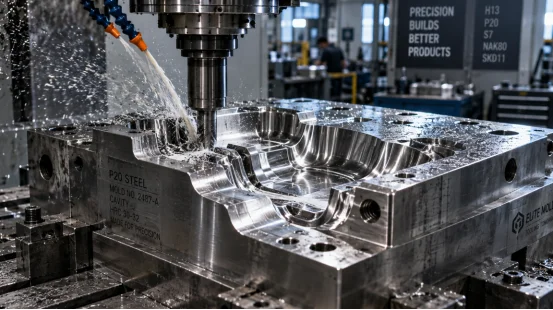
Le devis doit préciser l'acier du moule, la dureté cible, la norme de l'embase du moule, les systèmes de guidage et d'éjection, le type de canal d'alimentation, la conception de l'entrée, le système de refroidissement et l'état de surface. Les aciers P20, H13, S136, 1.2344 et NAK80 répondent à différents besoins en matière d'usure, de corrosion, de résistance à la chaleur et d'aspect. Demandez les certificats des matériaux et les rapports de traitement thermique. Vérifiez que la prise en charge inclut les composants du système à canaux chauds, les interfaces de contrôle, les broches d'éjection de rechange et les pièces d'usure.
Assistance en ingénierie, échantillonnage et production
Les prestations d'ingénierie sont incluses dans le devis d'outillage. Elles peuvent comprendre l'analyse DFM, les recommandations concernant l'épaisseur des parois et le dépouillement, les paramètres de retrait, la simulation Moldflow, l'analyse de la ligne de joint et les modifications apportées au point d'injection ou à l'évent.
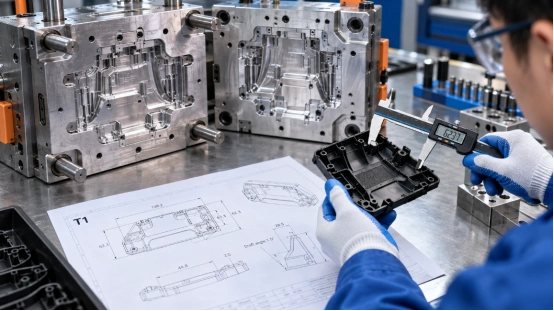
L'échantillonnage doit préciser le nombre d'essais, la résine, la méthode d'inspection et le format du rapport. Demandez qui est responsable des actions correctives T1 et si le moulage par injection en petite série est possible pour un essai pilote.
Comment comparer les coûts d'outillage ligne par ligne ?
Comparez les facteurs de coûts qui influent sur le coût unitaire et le risque du projet. Le fournisseur doit expliquer clairement chaque choix important, en fournissant un schéma ou un calcul lorsque ce choix a une incidence sur le prix.
Nombre de caries, choix du coureur et objectifs du cycle
Le nombre d'empreintes influe sur le rendement, l'équilibrage, la taille du moule et les efforts de validation. Un plus grand nombre d'empreintes permet de réduire le coût unitaire en grande série, grâce à des canaux d'alimentation équilibrés et un contrôle précis entre les empreintes. Un canal froid génère des rebuts qui doivent être triés et broyés. Un canal chaud permet d'ajouter des composants et des dispositifs de contrôle tout en éliminant le canal après chaque injection. Demandez le temps de cycle, la pression de remplissage, la force de pressage et les pertes de matière pour les deux options.
Pièces de refroidissement, d'éjection et d'usure
Le système de refroidissement influe sur le temps de cycle et la déformation. Demandez un schéma de refroidissement et renseignez-vous sur la gestion des points chauds autour des nervures, des bossages ou des parties épaisses. L'éjection doit également être adaptée à la géométrie : la disposition des broches, l'éjection des manchons, les poussoirs, les plaques d'éjection et l'assistance pneumatique ont tous une incidence sur le démoulage.
Pour les pièces filetées, demandez comment la rotation se synchronise avec l'ouverture du moule. Précisez les intervalles de maintenance des coulisseaux, des éjecteurs, des broches d'éjection et des noyaux rotatifs.
Comment vérifiez-vous les délais de livraison et les engagements concernant les échantillons T1 ?
Le délai de fabrication des moules devient utile lorsqu'il est décomposé en étapes clés vérifiables. Demandez les dates d'approbation de la conception pour la fabrication (DFM), de commande de l'acier, de validation de la conception du moule, d'ébauche, de finition, d'assemblage, d'échantillons T0 et T1, de contrôle dimensionnel et de réception finale. Un planning avec des responsables désignés vous permet de réagir rapidement à chaque évolution de la conception.
Étapes clés de la conception pour la fabrication (DFM) au moulage d'essai
Le processus normal comprend la conception du produit et l'analyse de fabricabilité (DFM), la conception du moule, l'outillage, le moulage d'essai, la production pilote, la production en série et la livraison. L'ingénierie en amont permet d'identifier les risques liés au remplissage, à la ventilation, au démoulage ou au gauchissement avant la découpe de l'acier. La base de connaissances indique un délai de deux à quatre semaines pour les travaux T1 standard et de quatre à huit semaines pour les projets complexes de dévissage ou les projets 2K. Veuillez vérifier ce délai en fonction de votre pièce et du rythme d'approbation.
Quelles preuves T1 devriez-vous demander ?
Demander un rapport d'injection avec le lot de résine, la machine, la température du moule, la pression, le temps de cycle et l'identification de la cavité.k pour les dimensions mesurées, les photos cosmétiques et les actions ouvertes. Un échantillon T1 lance la validation ; l’acceptation finale est soumise à des conditions de moulage stables et aux critères convenus.
Quelles questions de qualité devez-vous poser avant de choisir un fournisseur ?
Les questions relatives à la qualité permettent d'évaluer comment un fournisseur gère les risques après la passation de la commande. Elles doivent être précises afin que les réponses puissent être vérifiées à l'aide de plans, de rapports ou d'échantillons.
Contrôle dimensionnel et analyse de Moldflow
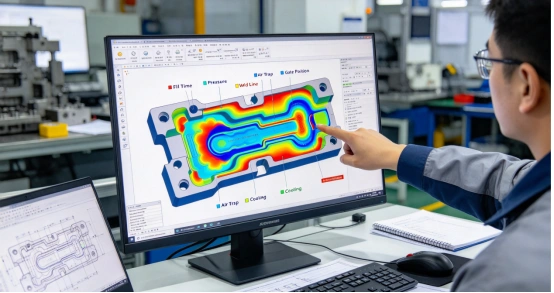
Demandez comment le fournisseur maîtrise l'usinage CNC, l'électroérosion, la découpe au fil et l'alignement des pièces. Un usinage de précision à ±0,01 mm permet d'obtenir des ajustements précis lorsque le plan et la méthode de contrôle correspondent aux spécifications. Demandez les résultats Moldflow concernant le remplissage, la pression, les lignes de soudure, les bulles d'air et l'équilibre du refroidissement.
Maintenance, durée de vie des outils et transfert de production
Votre plan de maintenance des moules doit préciser les points de lubrification, les limites d'usure, la protection antirouille, les pièces de rechange et les historiques d'entretien. Confirmez la durée de vie prévue de l'outillage pour l'acier et la résine choisis. Lors de la réception, demandez les plans définitifs, le schéma des cavités, un échantillon approuvé, les notes de processus, les données d'inspection et le calendrier de maintenance.
Une méthode pratique pour comparer les devis de votre projet
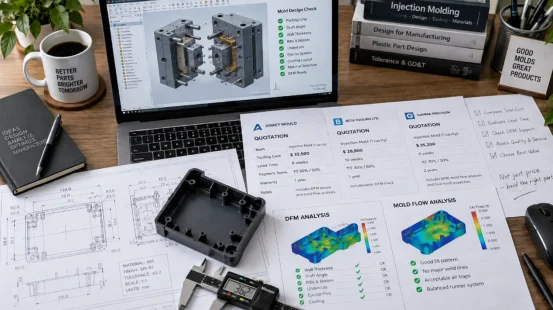
Élaborez un tableau comparatif pondéré comportant cinq groupes : étendue technique, contrôles qualité, calendrier, coût total de possession et communication. Évaluez chaque devis selon les mêmes critères.
Ajoutez le coût des modifications techniques, des pièces de rechange, du transport, de la résine d'essai et de la maintenance prévue. Ensuite, examinez les deux hypothèses les plus risquées avec chaque fournisseur lors d'une brève réunion de conception. Cette approche permet de transformer une comparaison de devis de moules d'injection en une décision documentée que vos équipes d'ingénierie et d'achat peuvent partager.
Comment une expertise technique approfondie peut-elle améliorer la fiabilité des devis ?
La confiance dans un devis s'accroît lorsque le fournisseur lie le prix aux décisions qui sécurisent votre lancement. XINKEY MOULD utilise un processus d'ingénierie préliminaire avec analyse DFM et Moldflow avant l'outillage. Son équipe de conception interne travaille sur l'épaisseur des parois, la dépouille, le retrait, les points d'injection, les canaux d'alimentation, le refroidissement, la ventilation, l'éjection et la résistance du moule. Cette approche convient aux projets où une conception doit être validée pour une production stable.
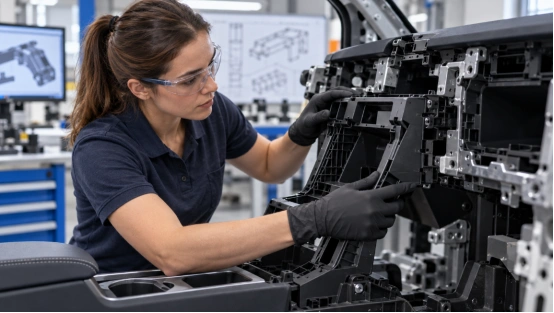
Pour les pièces complexes, notre équipe prend en charge les coulisseaux, les éjecteurs, les inserts, les noyaux filetés, le dévissage automatique et les structures bi-injectées 2K. L'usinage CNC est contrôlé avec une précision de ±0,01 mm, suivi de vérifications d'assemblage et d'un essai de moulage. Nous proposons également la réalisation de moules pour prototypes rapides et la production d'essai en petites séries, une étape pratique entre l'échantillon T1 et la production en série. Vous pouvez consulter notre gamme de moules d'injection pour obtenir un devis adapté à votre pièce.
FAQ
Q1 : Quel est le premier document à demander avec un devis d'outillage ?
A : Demandez un descriptif détaillé comprenant la configuration du moule, la nuance d'acier, le nombre de cavités, le plan des canaux d'alimentation et des points d'injection, le plan d'échantillonnage, les étapes clés du délai de livraison et les exclusions.
Q2 : Comment comparer un devis pour un système à canaux chauds et un devis pour un système à canaux froids ?
A : Comparez le coût total du système, l'objectif de cycle, les déchets de matériaux, les besoins en contrôleurs, l'accès pour la maintenance et le volume de production prévu.
Q3 : Que doit contenir un paquet d'échantillons T1 ?
A : Il doit contenir les conditions de tir, l'identification de la cavité, les dimensions mesurées, des photos de l'aspect esthétique, les quantités d'échantillons et les actions correctives en cours.
Q4 : Comment l'analyse DFM influence-t-elle un devis de moule ?
A : L'analyse DFM identifie les modifications d'épaisseur de paroi, de dépouille, de point d'injection, de ventilation, de refroidissement et de démoulage avant la découpe de l'acier, de sorte que le devis reflète une structure de moule fonctionnelle.
Q5 : Quels détails relatifs à l’entretien des moules doivent être pris en compte lors du choix du fournisseur ?
A : Vérifiez les hypothèses de durée de vie de l'outil, les points de lubrification, les limites des pièces d'usure, les pièces de rechange, les dossiers d'entretien, la protection contre la rouille et les documents de transfert fournis avec le moule.
EN SAVOIR PLUS