Wie man Angebote für Spritzguss wie ein Profi vergleicht
Wenn Sie Angebote von verschiedenen Spritzgussformenherstellern vergleichen, prüfen Sie neben dem Preis auch den angegebenen Leistungsumfang, die Annahmen zur Werkzeugstandzeit und den Musterplan.
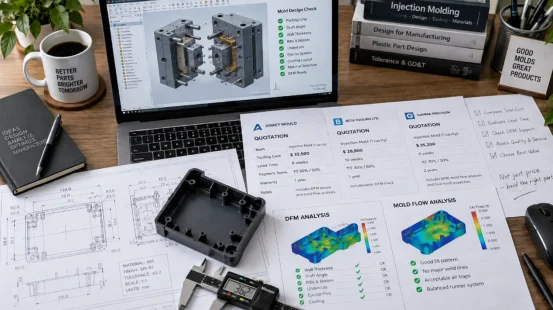
Ein hilfreicher Angebotsvergleich für Spritzgussformen stellt alle Anbieter auf die gleiche Zeichnungsrevision, das gleiche Harz, das gleiche Jahresvolumen, den gleichen Kavitätenplan, das gleiche Qualitätsziel und den gleichen Liefertermin. Wählen Sie den Werkzeugplan, der ein gutes Preis-Leistungs-Verhältnis mit stabilen Produktionsanforderungen und dokumentierten Lieferergebnissen bietet.
Warum variieren die Angebote für Spritzguss so stark?
Ein Angebot für eine Spritzgussform spiegelt sowohl die Konstruktionsentscheidungen als auch die Bearbeitungszeiten wider. Bitten Sie jeden Anbieter, die Annahmen hinter dem Preis offenzulegen, bevor Sie die Gesamtpreise vergleichen. Ein Angebot, das auf einem Einkavitätenwerkzeug, einem einfachen Kaltkanalsystem und einer kurzen Standzeit basiert, beschreibt ein anderes Projekt als ein Mehrkavitäten-Heißkanalwerkzeug für die Serienfertigung.
Umfang, Annahmen und Produktionsvolumen
Geben Sie jedem Lieferanten die gleichen 3D-Teiledatei, 2D-Zeichnung, Harzqualität, Farbe, Jahresbedarf und Verpackungsanforderungen. Fragen Sie, ob der Preis DFM-Analyse, Moldflow-Prüfung, Stahlzertifizierung, Probeformen, Prüfberichte, Verschleißteile und Frachtkosten beinhaltet.
Notieren Sie die erwartete Schusszahl und die Pressengröße. Eine Prototypenform hat eine andere Kostenstruktur als ein Produktionswerkzeug, das für Hunderttausende von Zyklen ausgelegt ist.
Formstruktur und Teilekomplexität
Trennlinien, Entformungsschrägen, Wandstärken, Hinterschneidungen, Gewinde und Oberflächenbeschaffenheit beeinflussen den Werkzeugkostenpreis. Schieber, Auswerfer, Einsätze, Entschraubmechanismen und Zweikomponenten-Formteile erfordern bewegliche Komponenten und Rüstaufwand. Fordern Sie einen vorläufigen Werkzeugentwurf an.
Daraus wird ersichtlich, ob der Lieferant die tatsächliche Konstruktion oder eine vereinfachte Version kalkuliert hat, die sich nach der Designprüfung noch ändern wird.
Was sollte ein Angebot für Spritzguss enthalten?
Ein vollständiges Angebot ordnet jeden Kostenpunkt einer bestimmten Leistung zu. Verwenden Sie für jeden Spritzgusslieferanten dieselbe Checkliste und markieren Sie jede Position als enthalten, optional oder ausgeschlossen.
Stahl, Komponenten und Formbasis
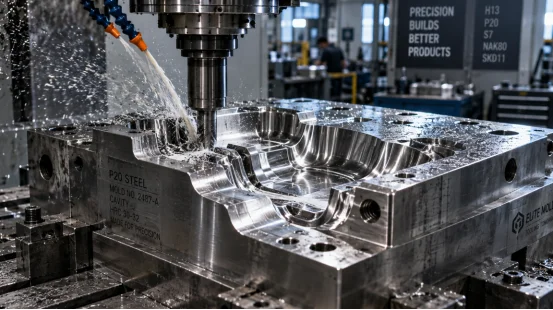
Das Angebot sollte Angaben zum Werkzeugstahl, der angestrebten Härte, dem Werkzeuggrundkörperstandard, den Führungs- und Auswerfersystemen, dem Angusskanaltyp, der Angussgestaltung, dem Kühlsystem und der Oberflächenbeschaffenheit enthalten. P20, H13, S136, 1.2344 und NAK80 eignen sich für unterschiedliche Anforderungen hinsichtlich Verschleiß, Korrosion, Hitzebeständigkeit und Optik. Fordern Sie Materialzertifikate und Wärmebehandlungsberichte an. Prüfen Sie, ob Heißkanalkomponenten, Steuerungsschnittstellen, Ersatzauswerferstifte und Verschleißteile im Angebot enthalten sind.
Unterstützung in den Bereichen Engineering, Probenahme und Produktion
Der Engineering-Leistungsumfang ist im Werkzeugangebot enthalten. Er kann DFM-Analysen, Empfehlungen zu Wandstärke und Entformungsschräge, Einstellungen zur Schwindung, Moldflow-Simulationen, Überprüfung der Trennlinie sowie Änderungen an Anguss oder Entlüftung umfassen.
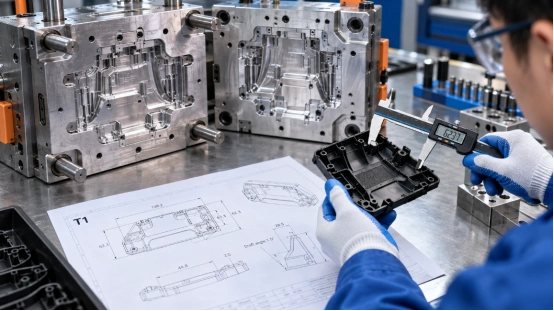
Die Probenahme sollte Angaben zur Anzahl der Versuche, zum verwendeten Harz, zur Prüfmethode und zum Berichtsformat enthalten. Klären Sie, wer für die Korrekturmaßnahmen der Kategorie T1 zuständig ist und ob Spritzguss in Kleinserien für eine Pilotproduktion möglich ist.
Wie kann man die Werkzeugkosten Position für Position vergleichen?
Vergleichen Sie die Kostentreiber, die die Stückkosten und das Projektrisiko beeinflussen. Ein Lieferant sollte die Gründe für jede wichtige Entscheidung in verständlicher Sprache erläutern und bei Preisänderungen eine Zeichnung oder Berechnung anführen.
Kavitätenanzahl, Wahl des Läufers und Zyklusziele
Die Anzahl der Kavitäten beeinflusst Ausstoß, Balance, Werkzeuggröße und Validierungsaufwand. Mehr Kavitäten können die Stückkosten bei hohen Stückzahlen senken, vorausgesetzt, die Angusskanäle sind ausbalanciert und die Kavitäten werden optimal aufeinander abgestimmt. Ein Kaltkanal erzeugt Ausschuss, der aussortiert und nachgemahlen werden muss. Ein Heißkanal ermöglicht zusätzliche Komponenten und Steuerungen und entfernt den Angusskanal nach jedem Schuss. Erfragen Sie Zykluszeit, Fülldruck, Presskraft und Materialverlust für beide Optionen.
Kühlung, Auswurf und Verschleißteile
Die Kühlungsanordnung beeinflusst Zykluszeit und Verzug. Fordern Sie ein Kühldiagramm an und fragen Sie nach, wie Wärmestaus an Rippen, Ansätzen oder dicken Abschnitten vermieden werden. Auch der Auswurf muss zur Geometrie passen: Stiftanordnung, Hülsenauswurf, Auswerfer, Abstreifplatten und Luftunterstützung beeinflussen die Auswurfvorrichtung.
Bei Gewindeteilen ist zu erfragen, wie die Rotation mit der Formöffnung synchronisiert wird. Wartungsintervalle für Schieber, Auswerfer, Auswerferstifte und rotierende Kerne sind anzugeben.
Wie überprüft man Lieferzeiten und T1-Musterzusagen?
Die Werkzeugfertigungszeit wird sinnvoll, wenn sie in überprüfbare Meilensteine unterteilt wird. Legen Sie Termine für die DFM-Freigabe, die Stahlbestellung, die Freigabe des Werkzeugdesigns, die Vorbearbeitung, die Fertigbearbeitung, die Montage, die Mustererstellung (T0 und T1), die Maßprüfung und die Endabnahme fest. Ein Zeitplan mit benannten Verantwortlichen ermöglicht es Ihnen, bei Änderungen im Konstruktionsprozess zu reagieren.
Meilensteine von DFM zu Probeformung
Der übliche Ablauf umfasst Produktdesign und DFM-Prüfung, Werkzeugkonstruktion, Probeformen, Pilotproduktion, Serienproduktion und Auslieferung. Die Vorentwicklung kann bereits vor dem Stahlschneiden Risiken wie Füllen, Entlüften, Entformen oder Verzug erkennen. Die Wissensdatenbank gibt für Standard-T1-Aufträge etwa zwei bis vier Wochen und für komplexe Projekte wie das Entschrauben oder 2K-Projekte vier bis acht Wochen an. Bitte prüfen Sie die voraussichtliche Bearbeitungszeit anhand Ihres Bauteils und der erforderlichen Freigabezeiten.
Welche T1-Nachweise sollten Sie anfordern?
Fordern Sie einen Schussdatensatz mit Harzcharge, Maschine, Werkzeugtemperatur, Druck, Zykluszeit und Kavitätenkennung an.k für gemessene Abmessungen, kosmetische Fotos und offene Aktionen. Eine T1-Probe dient als Validierungsgrundlage; die endgültige Abnahme erfolgt nach stabilen Formgebungsbedingungen und vereinbarten Kriterien.
Welche Qualitätsfragen sollten Sie vor der Auswahl eines Lieferanten stellen?
Qualitätsfragen zeigen, wie ein Lieferant nach der Bestellung mit Risiken umgeht. Formulieren Sie die Fragen präzise, damit die Antworten anhand von Zeichnungen, Berichten oder Musterteilen überprüft werden können.
Dimensionskontrolle und Moldflow-Überprüfung
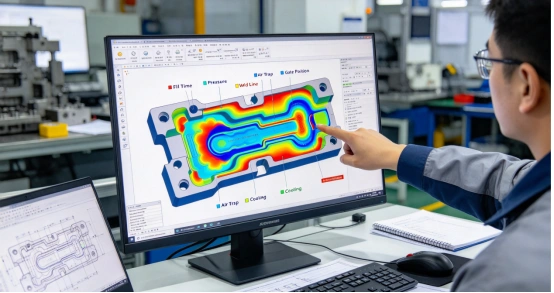
Erfragen Sie, wie der Lieferant CNC-Bearbeitung, EDM, Drahterodieren und die Ausrichtung der Montage steuert. Eine Bearbeitung mit einer Genauigkeit von ±0,01 mm ermöglicht enge Passungen, sofern Zeichnung und Prüfverfahren den Vorgaben entsprechen. Fordern Sie Moldflow-Ausgaben zu Füllmenge, Druck, Schweißnähten, Lufteinschlüssen und Kühlbilanz an.
Wartung, Werkzeugstandzeit und Produktionsübergabe
Ihr Werkzeugwartungsplan sollte Schmierstellen, Verschleißgrenzen, Rostschutzmaßnahmen, Ersatzteile und Wartungsnachweise enthalten. Bestätigen Sie die zu erwartende Werkzeugstandzeit für den gewählten Stahl und Kunststoff. Fordern Sie bei der Übergabe die endgültigen Zeichnungen, den Kavitätenplan, das freigegebene Muster, Prozessnotizen, Prüfdaten und den Wartungsplan an.
Eine praktische Methode zum Vergleichen von Angeboten für Ihr Projekt
Erstellen Sie eine gewichtete Vergleichstabelle mit fünf Gruppen: technischer Umfang, Qualitätskontrollen, Zeitplan, Betriebskosten und Kommunikation. Bewerten Sie jedes Angebot anhand derselben Kriterien.
Addieren Sie die Kosten für Konstruktionsänderungen, Ersatzteile, Fracht, Testharz und den zu erwartenden Wartungsaufwand. Besprechen Sie anschließend die beiden risikoreichsten Annahmen mit jedem Lieferanten in einem kurzen Designmeeting. So wird aus einem Angebotsvergleich für Spritzgussformen eine fundierte Entscheidung, die Ihre Entwicklungs- und Einkaufsteams gemeinsam nutzen können.
Wo kann technisches Know-how das Vertrauen in Angebote verbessern?
Das Vertrauen in Angebote steigt, wenn der Lieferant den Preis an Entscheidungen knüpft, die Ihren Marktstart sichern. XINKEY MOULD setzt auf einen umfassenden Engineering-Prozess mit DFM- und Moldflow-Prüfung vor der Werkzeugerstellung. Das interne Konstruktionsteam optimiert Wandstärke, Entformungsschräge, Schwindung, Angüsse, Verteilerkanäle, Kühlung, Entlüftung, Auswerfer und Werkzeugfestigkeit. Dieser Leistungsumfang eignet sich für Projekte, bei denen ein Design in die stabile Serienproduktion überführt werden muss.
Für komplexe Bauteile unterstützt unser Team Schieber, Auswerfer, Einsätze, Gewindekerne, automatische Entschraubung und 2K-Spritzgussstrukturen. Die CNC-Bearbeitung erfolgt mit einer Genauigkeit von ±0,01 mm, gefolgt von Montageprüfungen und der Verifizierung von Probeformen. Wir bieten außerdem Rapid-Prototyping-Formen und Kleinserien-Probefertigung an und ermöglichen Ihnen so einen praktischen Zwischenschritt zwischen einem T1-Muster und der Serienproduktion. Die relevanten Spritzgussformen können Sie einsehen, um ein passendes Angebot für Ihr Bauteil zu erhalten.
Häufig gestellte Fragen
Frage 1: Welches Dokument sollte man als erstes zusammen mit einem Angebot für Werkzeuge anfordern?
A: Fordern Sie eine detaillierte Leistungsbeschreibung mit Werkzeuglayout, Stahlsorte, Kavitätenanzahl, Anguss- und Verteilerplan, Bemusterungsplan, Meilensteinen der Lieferzeit und Ausschlüssen an.
Frage 2: Wie vergleicht man ein Angebot eines Top-Verkäufers mit einem Angebot eines Top-Verkäufers?
A: Vergleichen Sie die Gesamtsystemkosten, den Zykluszielwert, den Materialverbrauch, den Controllerbedarf, den Wartungszugang und das erwartete Produktionsvolumen.
Frage 3: Was sollte ein T1-Probenpaket enthalten?
A: Es sollte Angaben zu den Schussbedingungen, zur Kavitätsidentifizierung, zu den gemessenen Abmessungen, zu kosmetischen Fotos, zu den Probenmengen und zu den laufenden Korrekturmaßnahmen enthalten.
Frage 4: Wie wirkt sich die DFM-Analyse auf ein Angebot für Schimmelpilzbefall aus?
A: Die DFM-Analyse identifiziert Wandstärke-, Entformungs-, Anguss-, Entlüftungs-, Kühlungs- und Entformungsänderungen vor dem Stahlschneiden, sodass das Angebot eine praktikable Formstruktur widerspiegelt.
Frage 5: Welche Details zur Werkzeugwartung gehören zur Lieferantenauswahl?
A: Überprüfen Sie die Annahmen zur Werkzeugstandzeit, die Schmierstellen, die Verschleißgrenzen, die Ersatzteile, die Wartungsaufzeichnungen, den Rostschutz und die mit der Form gelieferten Übergabedokumente.
MEHR LESEN