Cómo comparar presupuestos de moldeo por inyección como un profesional
Al comparar presupuestos de diferentes fabricantes de moldes de inyección, revise el alcance indicado, la estimación de la vida útil de la herramienta y el plan de muestras junto al precio.
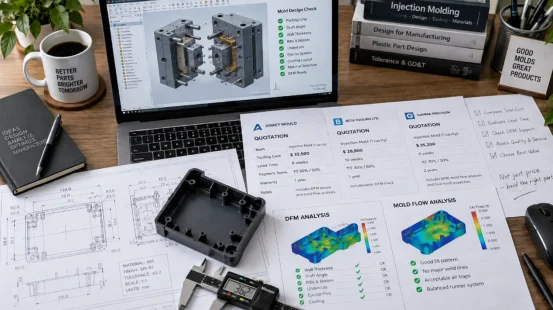
Una útil comparación de presupuestos para moldes de inyección sitúa a todos los proveedores en la misma revisión de planos, resina, volumen anual, plan de cavidades, objetivo de calidad e hito de entrega. Elija el plan de utillaje que vincule su precio con requisitos de producción estables y entregables documentados.
¿Por qué varían tanto los presupuestos para moldes de inyección?
Un presupuesto para un molde de inyección refleja tanto las decisiones de ingeniería como las horas de mecanizado. Antes de comparar los precios, pida a cada proveedor que explique los supuestos en los que se basa el precio. Un presupuesto basado en un molde de una sola cavidad, un sistema de canal frío sencillo y una vida útil corta describe un proyecto diferente al de un molde de canal caliente multicavidad para producción continua.
Alcance, supuestos y volumen de producción
Proporcione a cada proveedor el mismo archivo 3D de la pieza, el dibujo 2D, el tipo de resina, el color, la demanda anual y los requisitos de embalaje. Pregunte si el precio incluye el análisis DFM, la revisión de Moldflow, la certificación del acero, el moldeo de prueba, los informes de inspección, las piezas de repuesto y el flete.
Registre el número de inyecciones previsto y el tamaño de la prensa. Un molde prototipo tiene una estructura de costos diferente a la de una herramienta de producción planificada para cientos de miles de ciclos.
Estructura del molde y complejidad de la pieza
Las líneas de separación, los ángulos de desmoldeo, el espesor de pared, los rebajes, las roscas y las superficies superficiales modifican el presupuesto de utillaje. Los deslizadores, elevadores, insertos, mecanismos de desenroscado y estructuras de dos inyecciones añaden componentes móviles y trabajo de preparación. Solicite un diseño preliminar del molde.
Indica si el proveedor ha presupuestado la estructura real o una versión simplificada que cambiará tras la revisión del diseño.
¿Qué debe incluir un presupuesto para moldeo por inyección?
Un presupuesto completo vincula cada costo con un producto o servicio. Utilice la misma lista de verificación para cada proveedor de moldeo por inyección e indique si cada partida está incluida, es opcional o está excluida.
Acero, componentes y base del molde
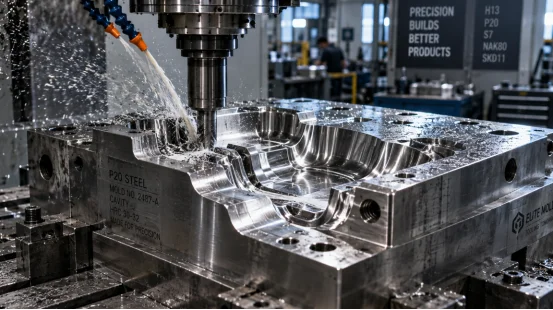
El presupuesto debe especificar el tipo de acero del molde, la dureza objetivo, el estándar de la base del molde, los sistemas de guía y eyector, el tipo de canal de alimentación, el diseño de la compuerta, el sistema de refrigeración y el acabado superficial. Los aceros P20, H13, S136, 1.2344 y NAK80 se adaptan a diferentes necesidades de resistencia al desgaste, corrosión, calor y apariencia. Solicite los certificados de materiales y los registros de tratamiento térmico. Confirme la cobertura para los componentes del canal caliente, las interfaces del controlador, los pasadores eyectores de repuesto y las piezas de desgaste.
Soporte de ingeniería, muestreo y producción
El alcance de la ingeniería debe incluirse en el presupuesto de utillaje. Puede abarcar análisis DFM, recomendaciones sobre espesor de pared y ángulo de desmoldeo, ajustes de contracción, simulación Moldflow, revisión de la línea de separación y modificaciones en la entrada o el orificio de ventilación.
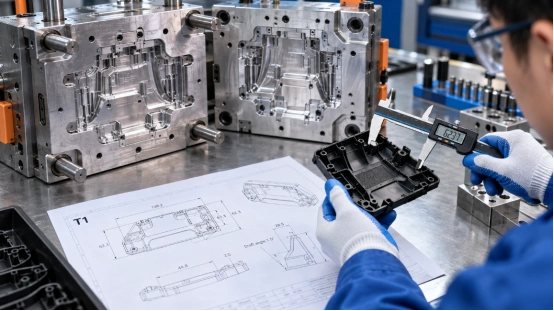
El muestreo debe indicar la cantidad de muestras, el tipo de resina, el método de inspección y el formato del informe. Pregunte quién se encarga de las acciones correctivas T1 y si se dispone de moldeo por inyección de bajo volumen para una prueba piloto.
¿Cómo se pueden comparar los costos de las herramientas línea por línea?
Compare los factores que influyen en el costo unitario y el riesgo del proyecto. El proveedor debe explicar el motivo de cada decisión importante en un lenguaje sencillo, incluyendo un diagrama o cálculo cuando dicha decisión modifique el precio.
Recuento de cavidades, elección del corredor y objetivos del ciclo
El número de cavidades afecta la producción, el equilibrio, el tamaño del molde y el esfuerzo de validación. Un mayor número de cavidades puede reducir el coste unitario en volúmenes altos, con canales de alimentación equilibrados y control entre cavidades. Un canal frío genera desperdicio que requiere separación y reprocesamiento. Un canal caliente añade componentes y controles, a la vez que elimina el canal de cada inyección. Solicite información sobre el tiempo de ciclo, la presión de llenado, el tonelaje de la prensa y el desperdicio de material para ambas opciones.
Piezas de refrigeración, eyección y desgaste
El diseño de refrigeración controla el tiempo de ciclo y la deformación. Solicite un diagrama de refrigeración y pregunte cómo se gestionarán los puntos calientes alrededor de las nervaduras, salientes o secciones gruesas. La eyección también debe coincidir con la geometría: la disposición de los pasadores, la eyección de los manguitos, los elevadores, las placas extractoras y la asistencia neumática influyen en la liberación.
Para las piezas roscadas, pregunte cómo se sincroniza la rotación con la apertura del molde. Incluya los intervalos de mantenimiento para las guías, los elevadores, los pasadores eyectores y los núcleos giratorios.
¿Cómo se verifican los plazos de entrega y los compromisos de muestras T1?
El plazo de entrega del molde resulta útil cuando se divide en hitos revisables. Solicite fechas para la aprobación del DFM, el pedido de acero, la liberación del diseño del molde, el mecanizado en bruto, el mecanizado de acabado, el ensamblaje, la muestra T0 y T1, la inspección dimensional y la aceptación final. Un cronograma con responsables designados le permite actuar cuando se modifica una decisión de diseño.
Hitos desde el diseño para la fabricación (DFM) hasta el moldeo de prueba.
El flujo normal abarca desde el diseño del producto y la revisión DFM hasta el diseño del molde, la fabricación de herramientas, el moldeo de prueba, la producción piloto, la producción en masa y la entrega. La ingeniería inicial permite identificar riesgos de llenado, ventilación, desmoldeo o deformación antes del corte del acero. La base de conocimientos indica un plazo de entre dos y cuatro semanas para trabajos estándar T1 y de cuatro a ocho semanas para proyectos complejos de desenroscado o 2K. Confirme los plazos en función de su pieza y la velocidad de aprobación.
¿Qué pruebas T1 debería solicitar?
Solicite un registro de inyección con lote de resina, máquina, temperatura del molde, presión, tiempo de ciclo e identificación de la cavidad.k para dimensiones medidas, fotos cosméticas y acciones abiertas. Una muestra T1 inicia la validación; la aceptación final se produce tras condiciones de moldeo estables y el cumplimiento de los criterios acordados.
¿Qué preguntas sobre calidad debería hacerse antes de elegir un proveedor?
Las preguntas sobre calidad revelan cómo un proveedor gestiona el riesgo después de realizar el pedido. Es importante que sean específicas para que las respuestas puedan verificarse en planos, informes o muestras de piezas.
Revisión del control dimensional y del flujo de moldes
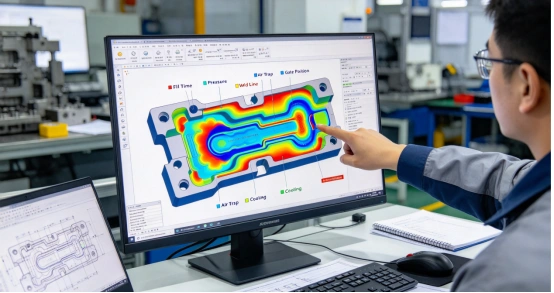
Pregunte cómo el proveedor controla el mecanizado CNC, la electroerosión, el corte por hilo y la alineación del ensamblaje. El mecanizado con una precisión de ±0,01 mm permite trabajar en áreas de ajuste preciso cuando el plano y el método de inspección coinciden con el objetivo. Solicite los resultados de Moldflow que incluyan el llenado, la presión, las líneas de soldadura, las trampas de aire y el equilibrio de refrigeración.
Mantenimiento, vida útil de las herramientas y traspaso de la producción
Su plan de mantenimiento del molde debe especificar los puntos de lubricación, los límites de desgaste, la protección contra la corrosión, los componentes de repuesto y los registros de servicio. Confirme la vida útil prevista de la herramienta para el acero y la resina seleccionados. Al momento de la entrega, solicite los planos finales, el mapa de cavidades, la muestra aprobada, las notas del proceso, los datos de inspección y el programa de mantenimiento.
Una forma práctica de comparar presupuestos para tu proyecto.
Elabore una hoja comparativa ponderada con cinco grupos: alcance técnico, controles de calidad, cronograma, costo total de propiedad y comunicación. Califique cada cotización según los mismos requisitos.
Sume el costo de las modificaciones de ingeniería, las piezas de repuesto, el flete, la resina de prueba y el mantenimiento previsto. Luego, revise los dos supuestos de mayor riesgo con cada proveedor en una breve reunión de diseño. Este enfoque convierte la comparación de presupuestos de moldes de inyección en una decisión documentada que sus equipos de ingeniería y compras pueden compartir.
¿En qué aspectos puede la profundidad de la ingeniería mejorar la confianza en las cotizaciones?
La confianza en las cotizaciones aumenta cuando el proveedor vincula el precio a las decisiones que protegen el lanzamiento. XINKEY MOULD utiliza un proceso de ingeniería inicial con revisión DFM y Moldflow antes de la fabricación de las herramientas. Su equipo de diseño interno trabaja en el espesor de pared, el ángulo de desmoldeo, la contracción, las compuertas, los canales de alimentación, la refrigeración, la ventilación, la eyección y la resistencia del molde. Este alcance se adapta a proyectos donde el diseño debe alcanzar una producción estable.
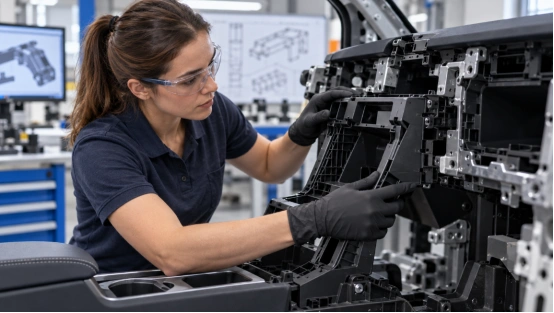
Para piezas complejas, el equipo ofrece soporte para deslizadores, elevadores, insertos, núcleos roscados, desenroscado automático y estructuras de doble inyección 2K. El mecanizado CNC se controla con una precisión de ±0,01 mm, seguido de comprobaciones de montaje y verificación del moldeo de prueba. La empresa también ofrece soporte para la creación rápida de prototipos y la producción de prueba de bajo volumen, lo que le proporciona un paso práctico entre la muestra T1 y la producción a gran escala. Puede consultar los productos de moldeo por inyección relevantes al solicitar un presupuesto para su tipo de pieza.
Preguntas frecuentes
P1: ¿Cuál es el primer documento que se debe solicitar junto con un presupuesto de herramientas?
A: Solicite un alcance detallado con el diseño del molde, el grado del acero, el número de cavidades, el plan de canales y compuertas, el plan de muestreo, los hitos del plazo de entrega y las exclusiones.
P2: ¿Cómo se deben comparar los presupuestos de un corredor en caliente y un corredor en frío?
A: Compare el costo total del sistema, el objetivo del ciclo, el desperdicio de material, las necesidades de control, el acceso para el mantenimiento y el volumen de producción esperado.
P3: ¿Qué debe contener un paquete de muestras T1?
A: Debe contener las condiciones de disparo, la identificación de la cavidad, las dimensiones medidas, fotos del aspecto estético, las cantidades de muestra y las acciones correctivas pendientes.
P4: ¿Cómo afecta el análisis DFM a un presupuesto de molde?
A: El análisis DFM identifica cambios en el espesor de la pared, el tiro, la entrada de aire, la ventilación, la refrigeración y el desmoldeo antes del corte del acero, por lo que el presupuesto refleja una estructura de molde viable.
P5: ¿Qué detalles sobre el mantenimiento del molde deben tenerse en cuenta en la selección del proveedor?
A: Compruebe las suposiciones sobre la vida útil de la herramienta, los puntos de lubricación, los límites de las piezas de desgaste, las piezas de repuesto, los registros de servicio, la protección contra la corrosión y los documentos de entrega suministrados con el molde.
LEER MÁS