Como comparar orçamentos de moldagem por injeção como um profissional
Ao comparar orçamentos de diferentes fabricantes de moldes de injeção, analise o escopo declarado, a estimativa de vida útil da ferramenta e o plano de amostragem, além do preço.
Uma comparação eficaz de orçamentos para moldes de injeção coloca todos os fornecedores em pé de igualdade em relação à revisão do desenho, resina, volume anual, plano de cavidades, meta de qualidade e prazo de entrega. Escolha o plano de ferramental que ofereça o melhor custo-benefício, com base em requisitos de produção estáveis e entregas documentadas.
Por que os orçamentos para moldagem por injeção variam tanto?
Um orçamento para moldes de injeção reflete decisões de engenharia, bem como horas de usinagem. Antes de comparar os valores totais, peça a cada fornecedor que explique as premissas por trás do preço. Um orçamento baseado em um molde de cavidade única, um sistema de canais frios simples e uma vida útil curta descreve um projeto diferente de um molde de canais quentes com múltiplas cavidades para produção contínua.
Escopo, Pressupostos e Volume de Produção
Forneça a todos os fornecedores o mesmo arquivo 3D da peça, desenho 2D, especificação da resina, cor, demanda anual e requisitos de embalagem. Pergunte se o preço inclui análise DFM, revisão Moldflow, certificação do aço, moldagem de teste, relatórios de inspeção, peças de reposição e frete.
Registre a quantidade esperada de injeções e o tamanho da prensa. Um molde protótipo tem uma estrutura de custos diferente de uma ferramenta de produção planejada para centenas de milhares de ciclos.
Estrutura do molde e complexidade da peça
Linhas de partição, ângulos de saída, espessura da parede, rebaixos, roscas e superfícies com acabamento alteram o custo das ferramentas. Deslizadores, extratores, insertos, mecanismos de desrosqueamento e estruturas de injeção dupla adicionam componentes móveis e trabalho de preparação. Solicite um layout preliminar do molde.
Isso mostra se o fornecedor cotou o preço da estrutura real ou de uma versão simplificada que será alterada após a revisão do projeto.
O que deve incluir um orçamento para moldes de injeção?
Um orçamento completo vincula cada custo a um produto final. Use a mesma lista de verificação para cada fornecedor de moldagem por injeção e marque cada item como incluído, opcional ou excluído.
Aço, componentes e base para moldes
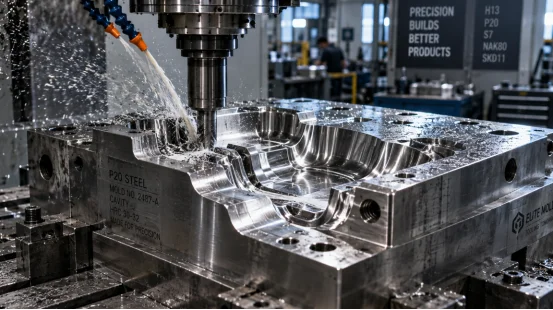
O orçamento deve especificar o aço do molde, a dureza desejada, o padrão da base do molde, os sistemas de guia e ejetor, o tipo de canal de alimentação, o projeto do ponto de injeção, o sistema de refrigeração e o acabamento superficial. Os aços P20, H13, S136, 1.2344 e NAK80 atendem a diferentes necessidades de resistência ao desgaste, corrosão, calor e aparência. Solicite certificados de materiais e registros de tratamento térmico. Confirme a cobertura para componentes do sistema de canais quentes, interfaces do controlador, pinos extratores sobressalentes e peças de desgaste.
Suporte em engenharia, amostragem e produção
O escopo de engenharia deve estar incluído no orçamento de ferramentas. Pode incluir análise DFM (Design for Manufacturing), recomendações de espessura de parede e ângulo de saída, configurações de contração, simulação Moldflow, revisão da linha de partição e alterações de pontos de injeção ou ventilação.
A amostragem deve especificar a quantidade de amostras, a resina, o método de inspeção e o formato do relatório. Pergunte quem é responsável pelas ações corretivas de nível 1 e se a moldagem por injeção de baixo volume está disponível para um teste piloto.
Como comparar o custo das ferramentas linha por linha?
Compare os fatores que influenciam o custo unitário e o risco do projeto. O fornecedor deve explicar o motivo de cada escolha principal em linguagem clara, apresentando um desenho ou cálculo quando a escolha alterar o preço.
Contagem de cavidades, escolha do canal radicular e metas de ciclo.
O número de cavidades afeta a produção, o balanceamento, o tamanho do molde e o esforço de validação. Mais cavidades podem reduzir o custo unitário em altos volumes, com canais de injeção balanceados e controle entre elas. Um canal frio gera sucata para separação e remanufatura. Um canal quente adiciona componentes e controles, removendo o canal de injeção a cada aplicação. Solicite informações sobre tempo de ciclo, pressão de enchimento, tonelagem da prensa e desperdício de material para ambas as opções.
Resfriamento, Ejeção e Peças de Desgaste
O projeto de refrigeração controla o tempo de ciclo e a deformação. Solicite um diagrama de refrigeração e pergunte como os pontos quentes ao redor das nervuras, saliências ou seções espessas serão gerenciados. A ejeção também precisa ser compatível com a geometria: o layout dos pinos, a ejeção da camisa, os extratores, as placas extratoras e o auxílio de ar afetam a liberação.
Para peças roscadas, pergunte como a rotação se sincroniza com a abertura do molde. Inclua os intervalos de manutenção para guias, extratores, pinos ejetores e núcleos rotativos.
Como verificar o prazo de entrega e os compromissos de amostra T1?
O prazo de entrega do molde torna-se útil quando dividido em etapas revisáveis. Solicite datas para aprovação do DFM (Design for Manufacturing), pedido de aço, liberação do projeto do molde, usinagem de desbaste, usinagem de acabamento, montagem, amostras T0 e T1, inspeção dimensional e aceitação final. Um cronograma com responsáveis definidos permite que você aja conforme as decisões de projeto forem alteradas.
Marcos importantes desde o projeto para fabricação (DFM) até a moldagem de teste.
O fluxo normal vai do projeto do produto e revisão de DFM (Design for Manufacturing) ao projeto do molde, ferramental, moldagem de teste, produção piloto, produção em massa e entrega. A engenharia básica pode identificar riscos de preenchimento, ventilação, desmoldagem ou empenamento antes do corte do aço. A base de conhecimento indica cerca de duas a quatro semanas para trabalhos T1 padrão e de quatro a oito semanas para projetos complexos de desrosqueamento ou 2K. Confirme o prazo de acordo com a sua peça e a velocidade de aprovação.
Que tipo de evidência T1 você deve solicitar?
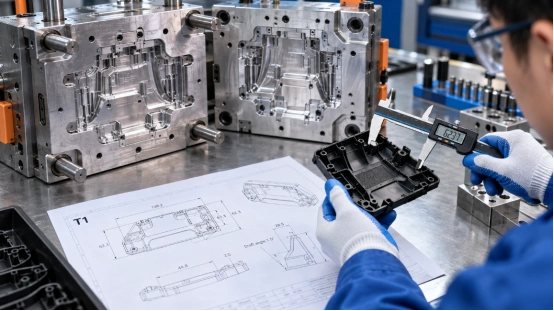
Solicite um registro de injeção com lote de resina, máquina, temperatura do molde, pressão, tempo de ciclo e identificação da cavidade.k para dimensões medidas, fotos cosméticas e ações abertas. Uma amostra T1 inicia a validação; a aceitação final segue condições de moldagem estáveis e critérios acordados.
Que perguntas sobre qualidade você deve fazer antes de escolher um fornecedor?
As perguntas sobre qualidade revelam como um fornecedor gerencia o risco após o pedido de compra. Mantenha-as específicas para que as respostas possam ser verificadas em desenhos, relatórios ou amostras de peças.
Análise de Controle Dimensional e Moldflow
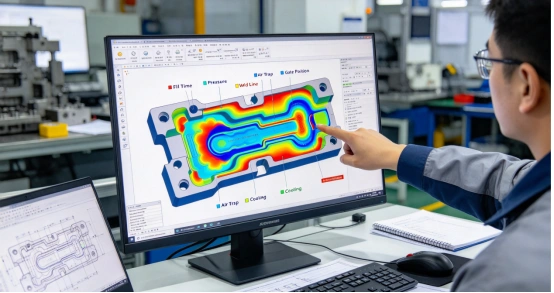
Pergunte como o fornecedor controla o CNC, a eletroerosão, o corte a fio e o alinhamento da montagem. A usinagem com precisão de ±0,01 mm pode ser útil em áreas de encaixe preciso quando o desenho e o método de inspeção correspondem ao objetivo. Solicite os resultados do Moldflow referentes a preenchimento, pressão, linhas de solda, bolhas de ar e equilíbrio de resfriamento.
Manutenção, vida útil das ferramentas e transferência para a produção.
Seu plano de manutenção do molde deve especificar os pontos de lubrificação, limites de desgaste, proteção contra ferrugem, componentes sobressalentes e registros de serviço. Confirme a vida útil esperada da ferramenta para o aço e a resina selecionados. Na entrega, solicite os desenhos finais, o mapa de cavidades, a amostra aprovada, as notas de processo, os dados de inspeção e o cronograma de manutenção.
Uma maneira prática de comparar orçamentos para o seu projeto.
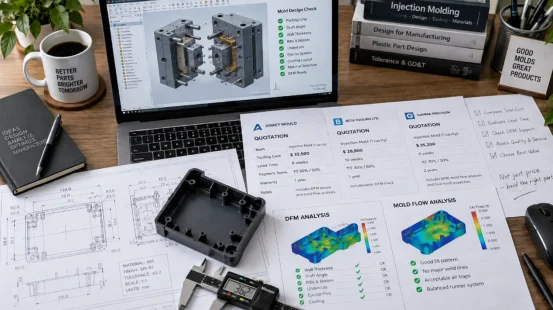
Crie uma planilha de comparação ponderada com cinco grupos: escopo técnico, controles de qualidade, cronograma, custo total de propriedade e comunicação. Avalie cada orçamento com base nos mesmos requisitos.
Adicione o custo de alterações de engenharia, peças de reposição, frete, resina de teste e manutenção prevista. Em seguida, revise as duas hipóteses de maior risco com cada fornecedor em uma breve reunião de projeto. Essa abordagem transforma uma comparação de orçamentos de moldes de injeção em uma decisão documentada que suas equipes de engenharia e compras podem compartilhar.
Em que situações o conhecimento aprofundado em engenharia pode aumentar a confiabilidade dos orçamentos?
A confiança no preço aumenta quando o fornecedor o vincula às decisões que protegem o lançamento do seu produto. A XINKEY MOULD utiliza um processo de engenharia inicial com análise de DFM (Design for Manufacturing) e Moldflow antes da fabricação das ferramentas. Sua equipe interna de design trabalha na espessura da parede, ângulo de saída, contração, pontos de injeção, canais de distribuição, resfriamento, ventilação, ejeção e resistência do molde. Essa abrangência é ideal para projetos em que o design precisa entrar em produção estável.
Para peças complexas, a equipe oferece suporte a deslizadores, extratores, insertos, núcleos roscados, desrosqueamento automático e estruturas de injeção dupla 2K. O trabalho CNC é controlado com uma precisão de ±0,01 mm, seguido por verificações de montagem e testes de moldagem. A empresa também oferece suporte a moldes para prototipagem rápida e produção experimental de baixo volume, proporcionando uma etapa prática entre uma amostra T1 e a produção em larga escala. Você pode analisar os produtos de moldagem por injeção relevantes ao comparar um orçamento com o tipo de peça desejada.
Perguntas frequentes
P1: Qual é o primeiro documento a ser solicitado junto com um orçamento de ferramentas?
A: Solicite um escopo detalhado com o layout do molde, tipo de aço, número de cavidades, plano de canais de injeção e pontos de alimentação, plano de amostragem, marcos de prazo de entrega e exclusões.
Q2: Como comparar um orçamento para canal quente com um orçamento para canal frio?
A: Compare o custo total do sistema, a meta de ciclo, o desperdício de material, as necessidades de controlador, o acesso para manutenção e o volume de produção esperado.
Q3: O que deve conter um pacote de amostra T1?
A: Deve conter as condições da injeção, a identificação da cavidade, as dimensões medidas, fotos do aspecto estético, as quantidades de amostra e as ações corretivas em aberto.
Q4: Como a análise DFM afeta o orçamento de um molde?
A: A análise DFM identifica alterações na espessura da parede, ângulo de saída, canais de injeção, ventilação, resfriamento e desmoldagem antes do corte do aço, portanto, o orçamento reflete uma estrutura de molde viável.
Q5: Quais detalhes de manutenção de moldes devem ser considerados na seleção de fornecedores?
A: Verifique as estimativas de vida útil da ferramenta, os pontos de lubrificação, os limites de desgaste das peças, as peças sobressalentes, os registros de manutenção, a proteção contra ferrugem e os documentos de entrega fornecidos com o molde.
LEIA MAIS