
Low-Volume Injection Molding: On-Demand Production & Fast Tooling
23rd October 2026
 author
Let’s be honest: in the injection molding world, “fixing it later” is a nightmare scenario. If you wait until the mold is on the press to find a massive sink mark or warpage, you’ve already lost the battle. The costs of recutting steel and the delays in shipping can kill a project’s ROI.
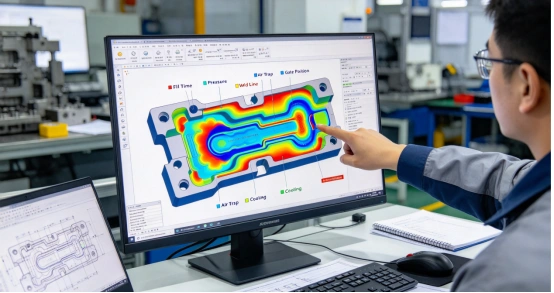
That’s exactly why Moldflow isn’t just a “fancy tool” for us—it’s our insurance policy. Here’s why it’s non-negotiable for any serious project.
1. No More “Guessing” at Defects
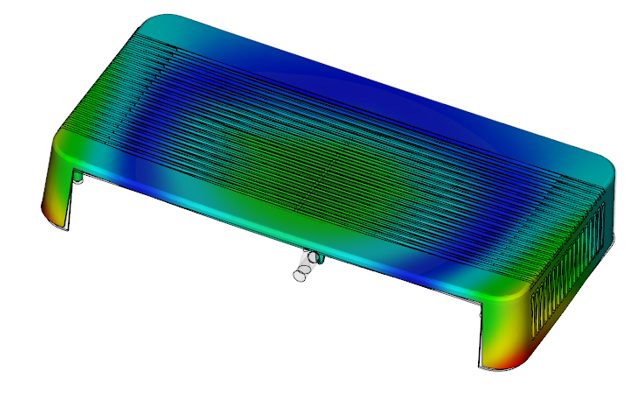
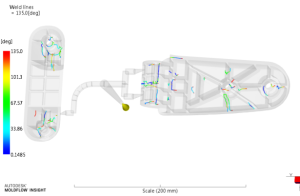
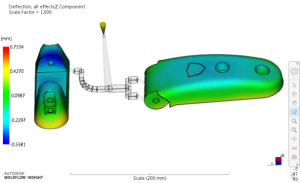
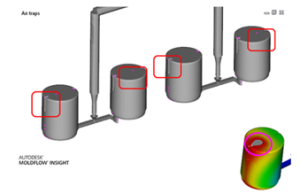
We’ve all been there: a part looks great on CAD, but the physical sample comes out with a nasty weld line right across a visible surface. Moldflow lets us “see the invisible” before we even touch the tool. We’re talking about spotting air traps, short shots, and sink marks while the design is still digital. Fixing a 3D model takes minutes; fixing a hardened steel mold takes weeks (and thousands of dollars).
2. Nailing the “T0” Success
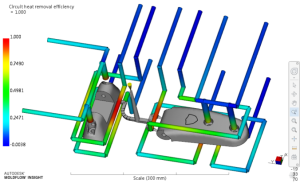
The goal is always a perfect T0 trial. To get there, you need more than just a good guess on gate placement. We use simulation to stress-test different scenarios: What if we move the gate 5mm? How does the cooling layout affect cycle time? By finding the optimal “process window” early, we save our customers from the endless loop of trial-and-error during mold sampling.
3. Staying “Steel-Safe”
Predicting shrinkage and warpage isn’t just a math exercise—it’s about staying “steel-safe.” There is nothing worse than getting your first samples back only to realize the part warped so badly it’s out of spec, and you’ve already cut away all the metal. Moldflow lets us build in those offsets early. It saves you from that mid-project heart attack when you realize the mold is “bricked” and requires expensive welding or a total rebuild just to get a usable dimension.
4. Shot-to-Shot Consistency
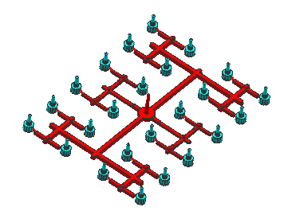
Look, anyone can get lucky and pull a decent first sample. But consistency over a 100,000-part run? That’s the real test. If your cooling isn’t uniform or your fill isn’t perfectly balanced, you’ll be “chasing dimensions” for the entire production life of the tool. Moldflow helps us iron out these kinks by ensuring every cavity behaves exactly the same. Whether it’s the 1st shot or the 50,000th, the part needs to fit—especially in high-precision assemblies where a few microns are the difference between a success and a reject.
5. Data Over “Gut Feelings”
We’ve all sat in meetings where three different people had three different “gut feelings” about where the gate should go. Experience is vital, but physics doesn’t have an ego. Moldflow gives us a quantitative roadmap based on actual pressure gradients and thermal curves. It shifts the conversation from a subjective “I think this might work” to an objective “the data shows this will work.” It takes the guesswork out of the room so we can focus on engineering.
At the end of the day, Moldflow is your ultimate de-risking strategy. It’s about compressing those painful development cycles and making sure that when we finally hit the “Cycle Start” button on the press, we aren’t just crossing our fingers and hoping for the best. We aren’t gambling with your budget—we’re executing a plan that’s already been proven in a virtual environment.
Related Posts



Contact Us