Low-Volume Injection Molding: On-Demand Production & Fast Tooling
23rd October 2026

 auteur
Si vous vous rendez dans un atelier d'injection plastique classique et demandez un moule en bakélite (phénolique), la plupart vous refuseront. Pourquoi ? Parce que la bakélite est un matériau thermodurcissable, et donc soumis à des règles totalement différentes de celles de l'ABS ou du PC standard.
Chez Xinkey, nous maîtrisons cet art complexe depuis plus de vingt ans, et nous fournissons à des marques comme TeFaL des composants résistants à la chaleur qui ne fondent jamais. Voici ce qui rend le moulage de la bakélite si difficile, et comment nous y parvenons.
Le plastique standard se travaille en le faisant fondre, en le moulant, puis en le refroidissant. La bakélite, quant à elle, s'apparente davantage à la cuisson d'un gâteau : il faut chauffer le moule pour déclencher une réaction chimique (durcissement).
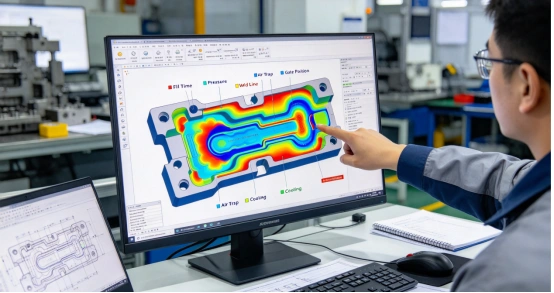
Si la température de votre moule est erronée de quelques degrés seulement, la pièce sera soit insuffisamment cuite (cassante), soit trop cuite (brûlée). Nous intégrons des cartouches chauffantes haute performance spécialisées dans nos conceptions 3D afin de garantir un profil thermique parfaitement uniforme dans toute la cavité.
Lors de son durcissement, la bakélite libère une grande quantité de gaz. Si ce gaz reste emprisonné, des « cavités » ou des marques de brûlure apparaissent en surface. La plupart des ateliers commettent cette erreur car ils utilisent une ventilation standard.
Chez Xinkey, nos concepteurs mettent au point des canaux de ventilation performants. Il s'agit d'interstices microscopiques (parfois de seulement 0,01 mm) suffisamment larges pour laisser échapper les gaz, mais suffisamment étroits pour éviter les projections de plastique. La marge d'erreur est infime et leur maîtrise exige 25 ans d'expérience.
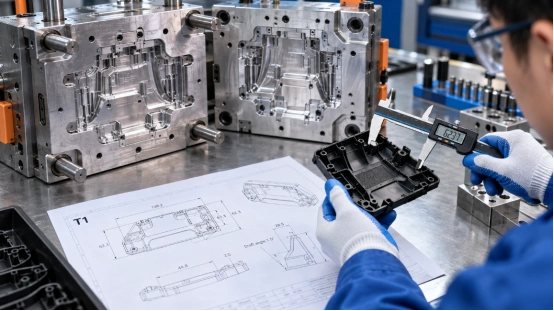
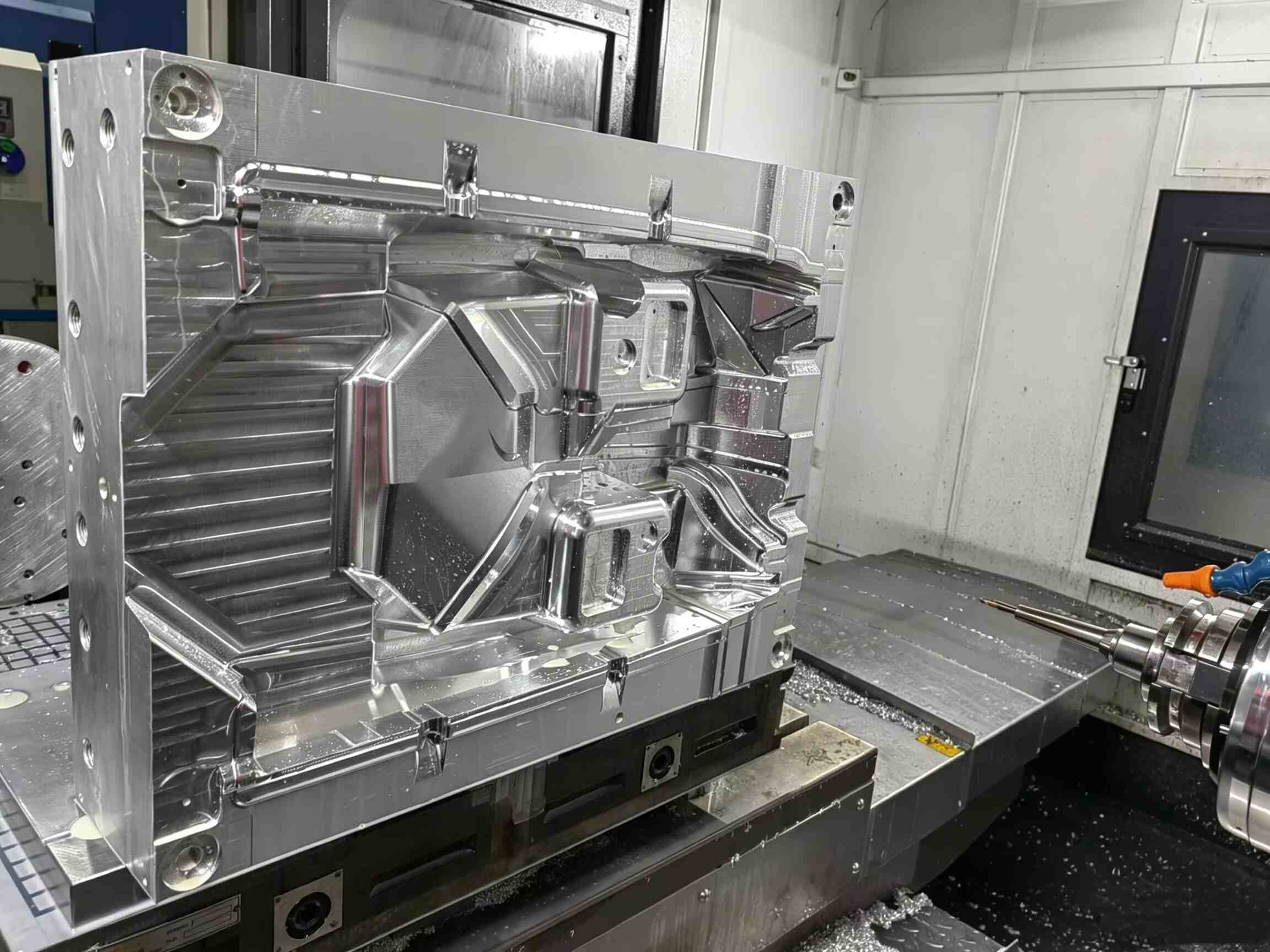
La bakélite est abrasive. Elle corrode l'acier tendre comme du papier de verre. C'est pourquoi nous n'utilisons jamais d'acier P20 ni d'acier bon marché pour ces projets. Nous utilisons exclusivement de l'acier trempé H13 ou S136, souvent avec des revêtements spéciaux, afin de garantir que le moule puisse supporter plus de 500 000 injections sans que les arêtes ne s'émoussent.
Ne confiez pas vos projets à haute température à un atelier qui « pense pouvoir le faire ». Faites confiance à une équipe qui vit et respire l'ingénierie des thermodurcissables depuis 25 ans.
Articles connexes



Nous contacter