Low-Volume Injection Molding: On-Demand Production & Fast Tooling
23rd October 2026


 author
How much does injection mold tooling cost? For a simple prototype or single cavity tool, the budget may start at a few thousand dollars. Complex multi cavity steel tooling can rise above $100,000. The real injection mold tooling cost depends on your part geometry, mold size, cavity count, steel, runner system, tolerance, surface finish, expected tool life, and special mechanisms.
That range is wide for a reason. A plastic part that looks simple on screen may need sliders, lifters, inserts, or an unscrewing system once mold release is considered. A small design change can shift the entire mold structure. If you are planning plastic injection molds, the useful question is not only “What is the injection mold tooling price?” but “What are you paying for, and can the design be made simpler before steel is cut?”

A practical budget starts with mold type and production goal. The figures below are broad planning ranges, not a final injection molding tooling quote.
| Tool Type | Typical Budget Direction | Common Use |
| Prototype or soft tool | A few thousand dollars and up | Validation, short runs |
| Single cavity production mold | Low to medium | Stable parts, moderate volume |
| Multi cavity steel mold | Medium to high | Higher output |
| Hot runner production mold | Higher upfront cost | High volume, lower runner waste |
| 2K, unscrewing, or complex action mold | High to very high | Complex functional parts |
Plastic injection mold cost is rarely set by part weight alone. A palm sized housing with a straight pull structure can cost less than a smaller threaded part that needs automatic unscrewing. Custom injection mold cost follows the engineering work inside the tool.
Injection molding tooling cost covers engineering, machining, fitting, trial molding, correction, and repeatable production, not just a mold base and steel.
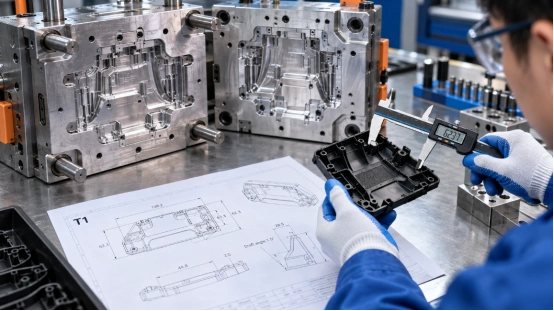
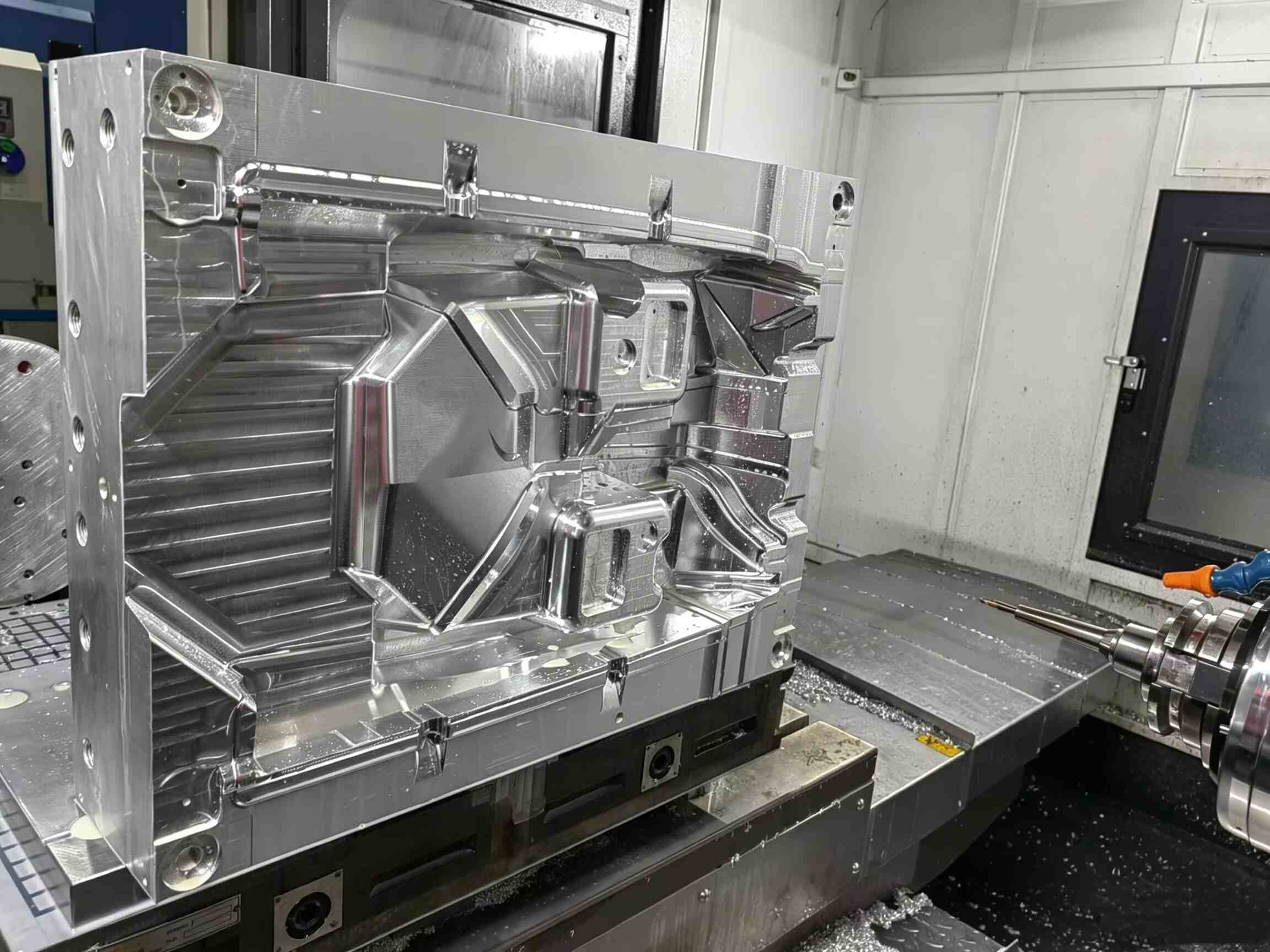
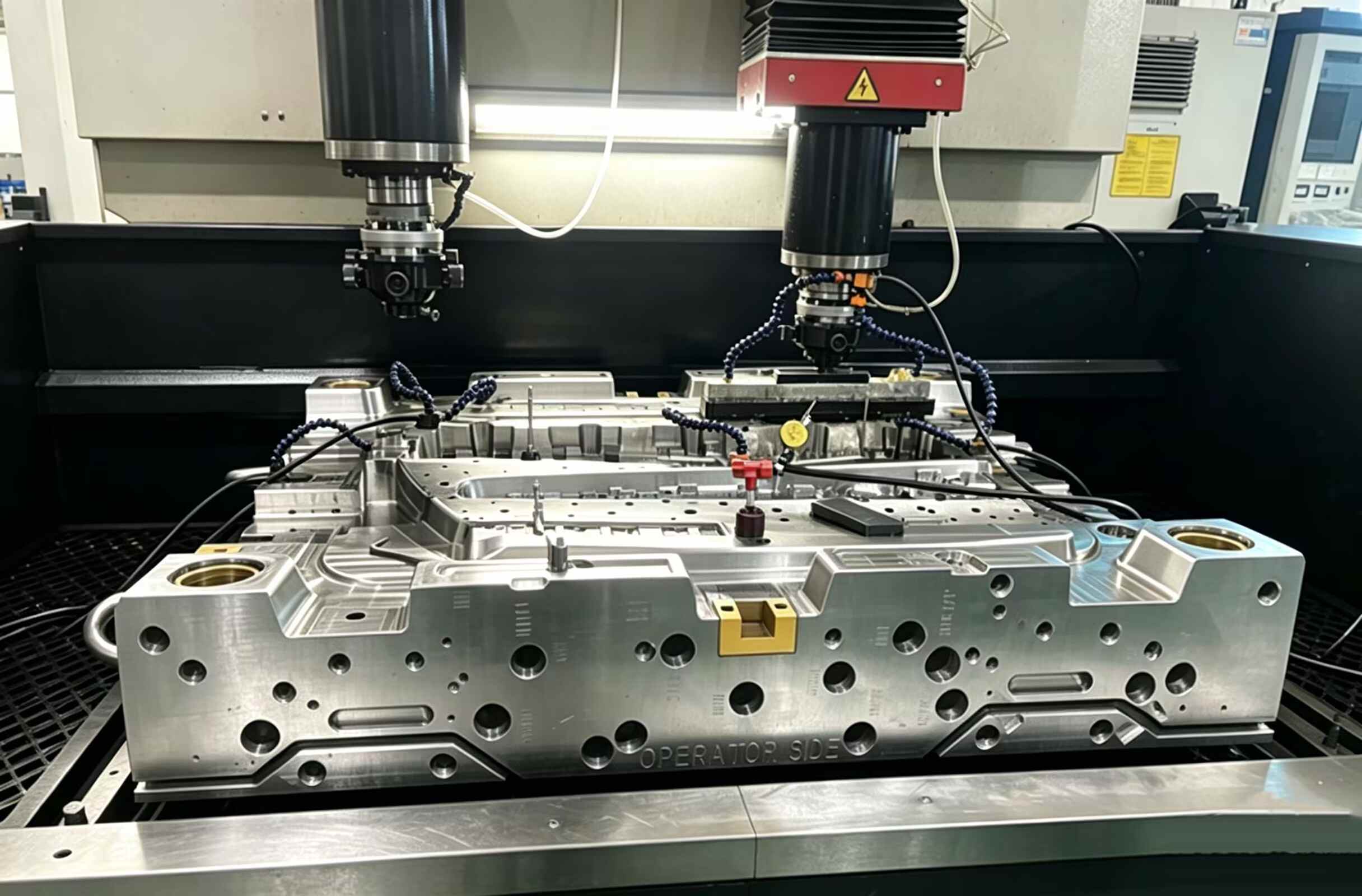
A typical process includes DFM, mold design, CNC machining, EDM, assembly, trial molding, sample inspection, and corrections. Common steels include P20, H13, S136, NAK80, 1.2343, 1.2344, and 8407, selected around resin, wear, finish, and tool life.
Cosmetic parts add polishing or texture work, while glass filled plastics can increase wear. Trial molding matters too. Warpage, flow marks, poor filling, sticking, or dimensional drift can turn a cheap quote into expensive rework.
The main injection mold cost factors interact, which is why two suppliers can quote the same CAD very differently.
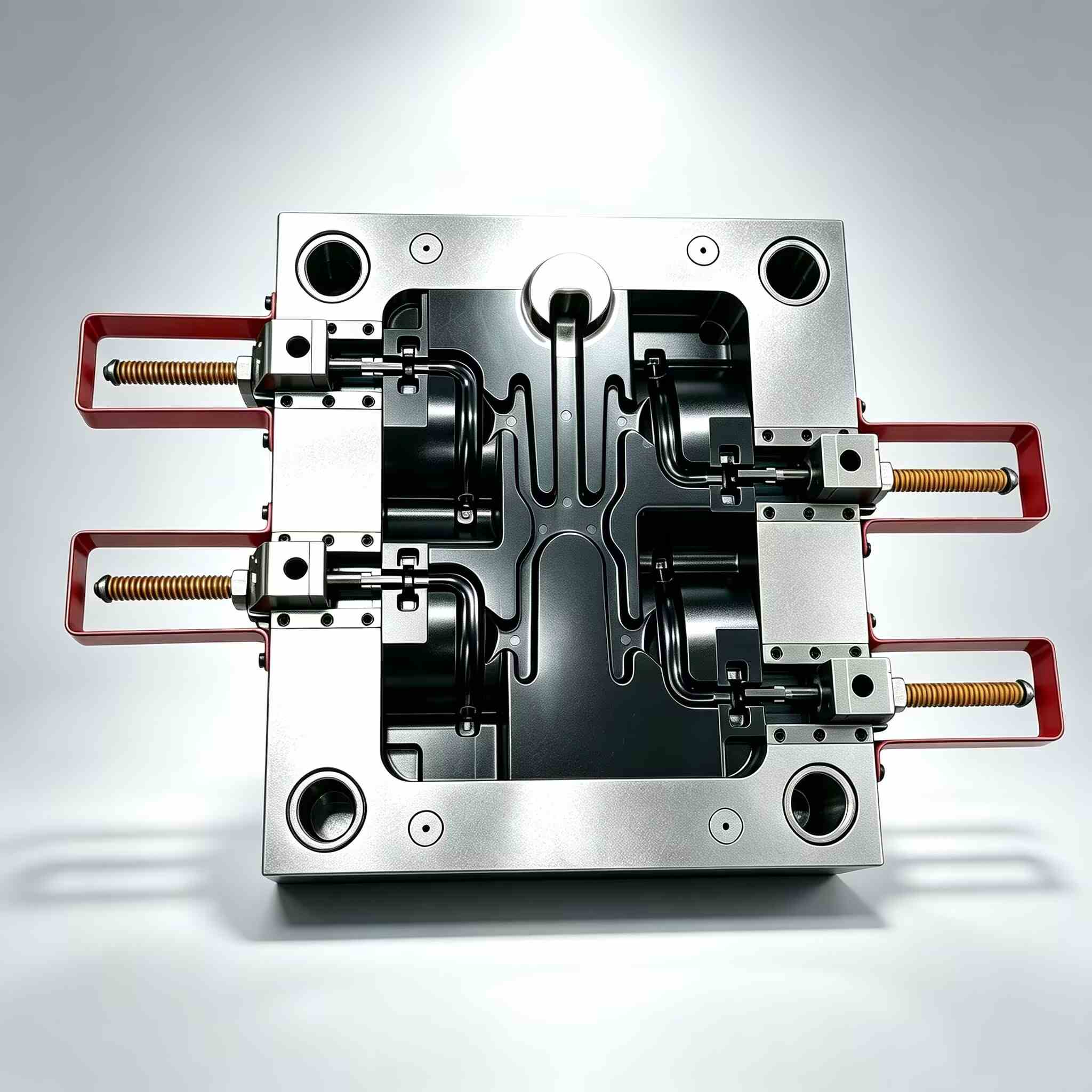
Undercuts are a common cost trigger. If the part cannot pull straight from the mold, it may need a slider, lifter, or unscrewing mechanism. More parts mean more machining and fitting.
Multi cavity mold cost also rises with cavity count because the tool becomes larger and runner balance, cooling, and machining become more demanding. Yet more cavities can lower part cost at high volume because each cycle produces more pieces.
Production injection mold cost rises when long service life calls for harder steel, heat treatment, wear parts, or tighter machining control. Hot runner mold cost is usually higher upfront because the system needs heated components and tighter temperature control. A cold runner is simpler and cheaper to build, but it creates runner scrap and may lengthen the cycle. At large volumes, the more expensive system can still make better financial sense.
A mirror surface, fine texture, or tight assembly fit also demands more machining, polishing, checking, and trial adjustment.

If you are searching for how to reduce injection mold cost, start before tooling. A short engineering review can save a surprising amount.
Check wall thickness, draft, ribs, undercuts, parting lines, gates, and ejection early. Moving a snap feature may remove a slider. A more even wall can reduce sink and warpage, while better draft can simplify ejection.
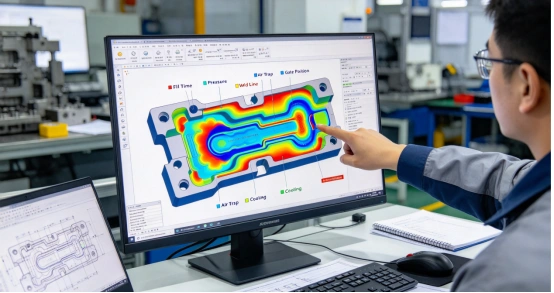
A DFM review can flag these points before machining. Moldflow is useful on complex parts because it can predict weld lines, air traps, filling imbalance, warpage, cooling trouble, and pressure risk. Catching those issues early can reduce repeated mold changes and extra trials.
The broader answer to how to reduce injection mold cost is simple: do not buy tool life or complexity you do not need. Match steel, cavity count, runner type, and mold class to the real production forecast.
An injection mold cost calculator helps with early budgeting. It can score part size, cavities, undercuts, runner type, mold life, and tolerance. But an injection mold cost calculator cannot see every shutoff, cooling issue, or assembly risk in your CAD.
For a reliable injection molding tooling quote, provide a 3D file, 2D drawing with critical tolerances, resin, expected annual volume, lifetime quantity, surface requirements, and any special mold standard. That information gives the engineer enough context to judge the real injection mold cost, not just a rough range.
A lower price may use different steel, fewer spare parts, simpler cooling, or less trial support. It may also exclude Moldflow, texture, hot runner components, dimensional reports, or later corrections.
Compare the scope line by line. Ask about tool life, steel grade, cavity count, runner system, critical tolerances, trial samples, modification policy, and maintenance parts. A cheaper injection mold tooling price is not automatically a cheaper project.
Once the design is stable, ask whether the supplier can carry the mold from engineering into repeatable production. That affects total injection mold tooling cost as much as the first quote.
XINKEY MOULD combines DFM, Moldflow, mold design, precision machining, trial molding, and production support in one workflow. Its engineering team handles complex structures such as sliders, lifters, inserts, automatic unscrewing, and two material tooling. The manufacturing setup includes 19+ CNC centers and injection capacity from 90T to 750T. Tooling can range from 150 kg to 15 tons, with mold sizes from 150 mm to 1,500 mm.
For projects that need validation before scale up, mold trial and production support can connect T1 samples, dimensional checks, corrections, and later production. More details on the manufacturing capabilities are available on the company site.
Q1: How much does injection mold tooling cost?
A: The range can start at a few thousand dollars for simple tooling and exceed $100,000 for complex multi cavity production molds. Final injection mold tooling cost depends on the actual CAD, volume, steel, cavities, mechanisms, tolerance, and finish.
Q2: What affects plastic injection mold cost most?
A: The biggest injection mold cost factors are part geometry, tool size, cavity count, undercuts, steel, mold life, runner system, tolerance, and surface finish.
Q3: What is the difference between prototype injection mold cost and production injection mold cost?
A: Prototype injection mold cost is usually lower because the tool targets shorter runs and easier changes. Production tooling needs greater durability, better cooling, and longer service life.
Q4: Why is multi cavity mold cost higher?
A: More cavities require more machining, a larger tool, balanced filling, and more complex cooling. The higher tooling spend can reduce unit cost when volume is large.
Q5: How do you get an accurate injection molding tooling quote?
A: Send the 3D CAD, 2D drawing, resin, annual volume, critical tolerances, surface finish, and expected tool life. That gives the supplier enough information to price the real manufacturing route.
Related Posts



Contact Us