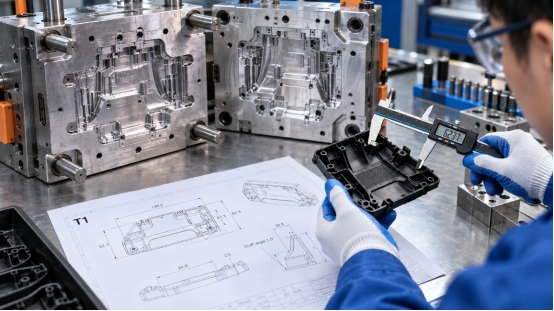
Low-Volume Injection Molding: On-Demand Production & Fast Tooling
23rd October 2026

 author
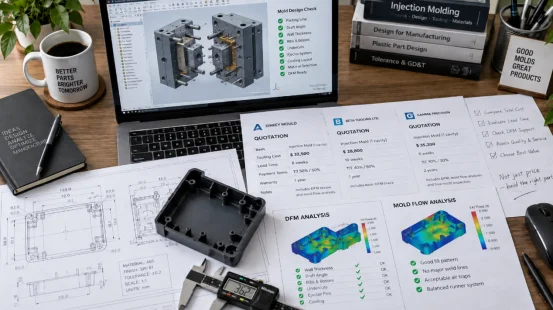
When you compare quotes from different injection mold manufacturers, review the stated scope, tool-life assumption, and sample plan beside the price.
A useful injection mold quote comparison puts every supplier on the same drawing revision, resin, annual volume, cavity plan, quality target, and delivery milestone. Choose the tooling plan that connects its price to stable production requirements and documented deliverables.
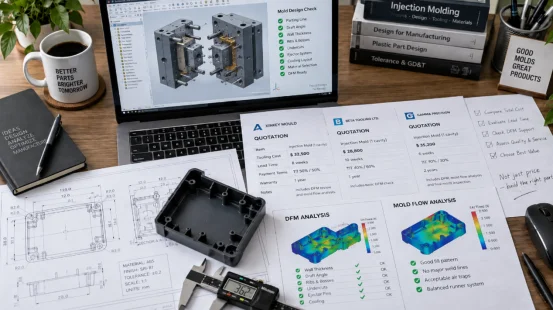
An injection mold quote reflects engineering decisions as well as machining hours. Ask each supplier to state the assumptions behind the price before you compare totals. A quote built on a single-cavity tool, a simple cold runner, and a short service life describes a different project from a multi-cavity hot-runner tool for continuous production.
Give every supplier the same 3D part file, 2D drawing, resin grade, color, annual demand, and packaging requirement. Ask whether the price includes DFM analysis, Moldflow review, steel certification, trial molding, inspection reports, spare wear parts, and freight.
Record the expected shot count and press size. A prototype mold has a different cost structure from a production tool planned for hundreds of thousands of cycles.
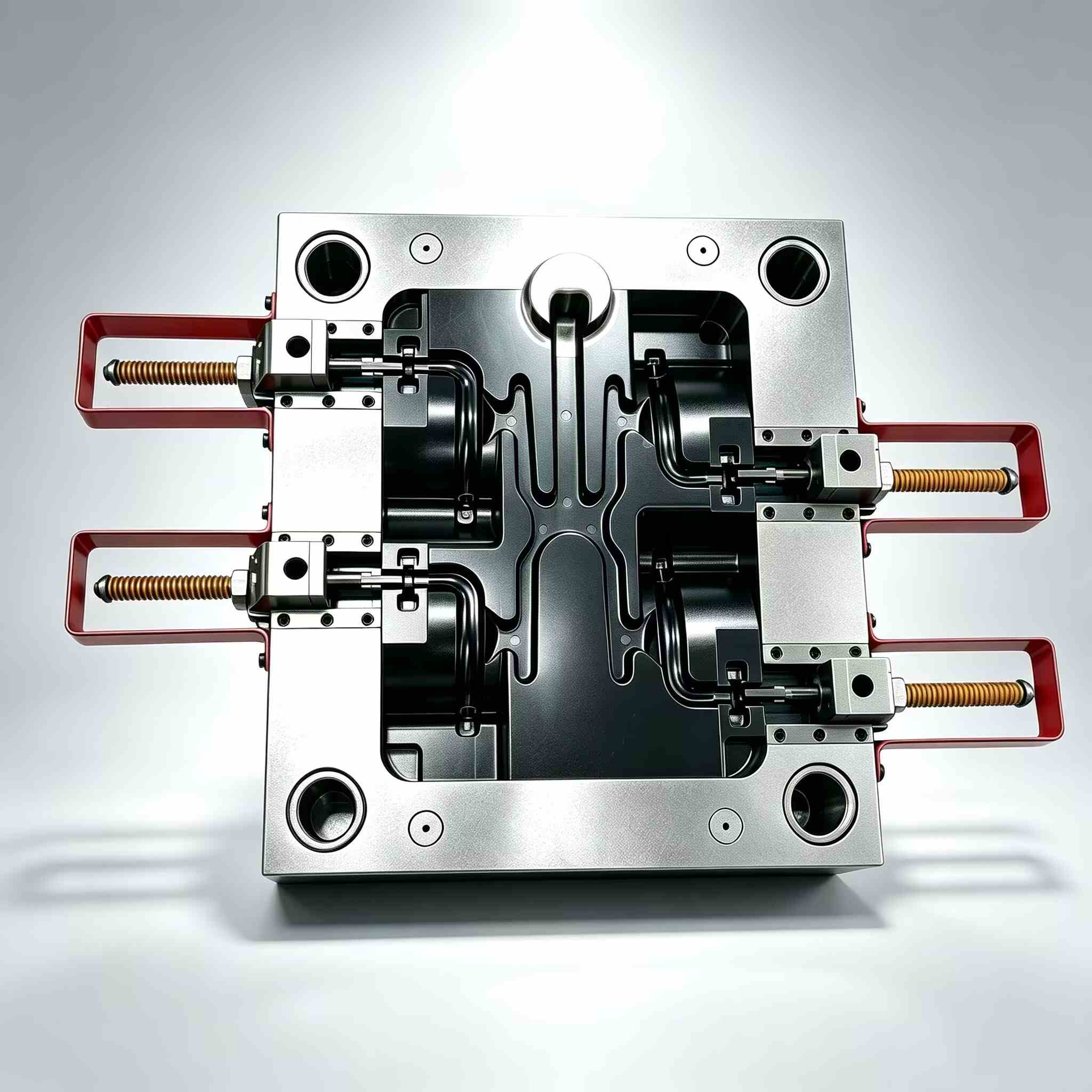
Parting lines, draft angles, wall thickness, undercuts, threads, and cosmetic surfaces change the tooling quote. Sliders, lifters, inserts, unscrewing mechanisms, and two-shot structures add moving components and setup work. Ask for a preliminary mold layout.
It shows whether the supplier has priced the actual structure or a simplified version that will change after design review.
A complete quote ties each cost to a deliverable. Use the same checklist for every injection molding supplier and mark each line included, optional, or excluded.
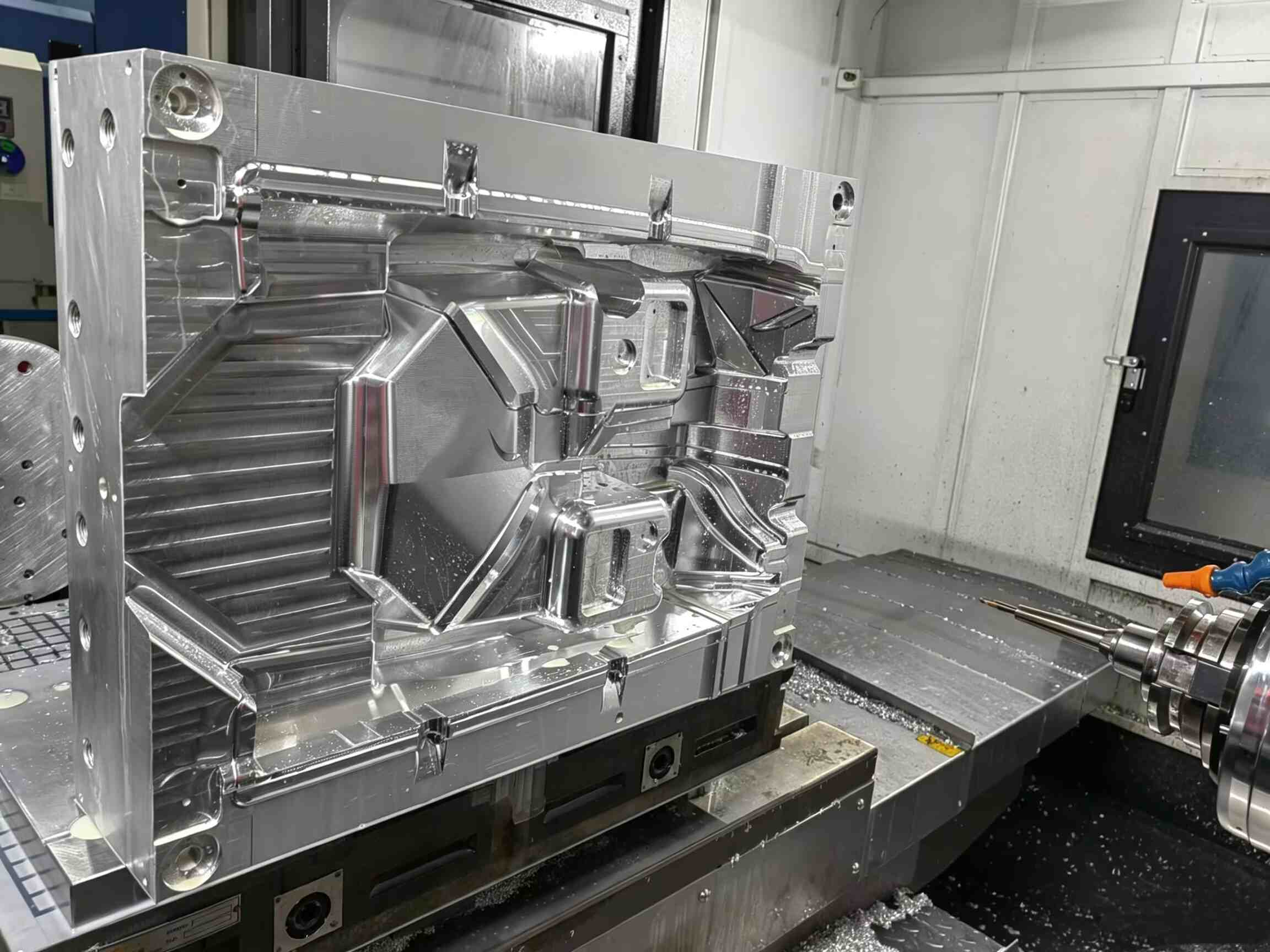
The quote should name mold steel, hardness target, mold base standard, guide and ejector systems, runner type, gate design, cooling system, and surface finish. P20, H13, S136, 1.2344, and NAK80 suit different wear, corrosion, heat, and appearance needs. Ask for material certificates and heat-treatment records. Confirm coverage for hot runner components, controller interfaces, spare ejector pins, and wear parts.
Engineering scope belongs in the tooling quote. It may include DFM analysis, wall-thickness and draft recommendations, shrinkage settings, Moldflow simulation, parting-line review, and gate or vent changes.
Sampling should state trial count, resin, inspection method, and report format. Ask who handles T1 corrective actions and whether low-volume injection molding is available for a pilot run.
Compare the cost drivers that affect unit cost and project risk. A supplier should explain the reason for each major choice in plain language, with a drawing or calculation when the choice changes the price.
The cavity count affects output, balance, mold size, and validation effort. More cavities can reduce piece cost at high volume, with balanced runners and cavity-to-cavity control. A cold runner creates scrap for separation and regrind. A hot runner adds components and controls while removing the runner from each shot. Ask for cycle time, fill pressure, press tonnage, and material waste for both options.
Cooling layout controls cycle time and warpage. Request a cooling diagram and ask how hot spots around ribs, bosses, or thick sections will be managed. Ejection also needs to match the geometry: pin layout, sleeve ejection, lifters, stripper plates, and air assist each affect release.
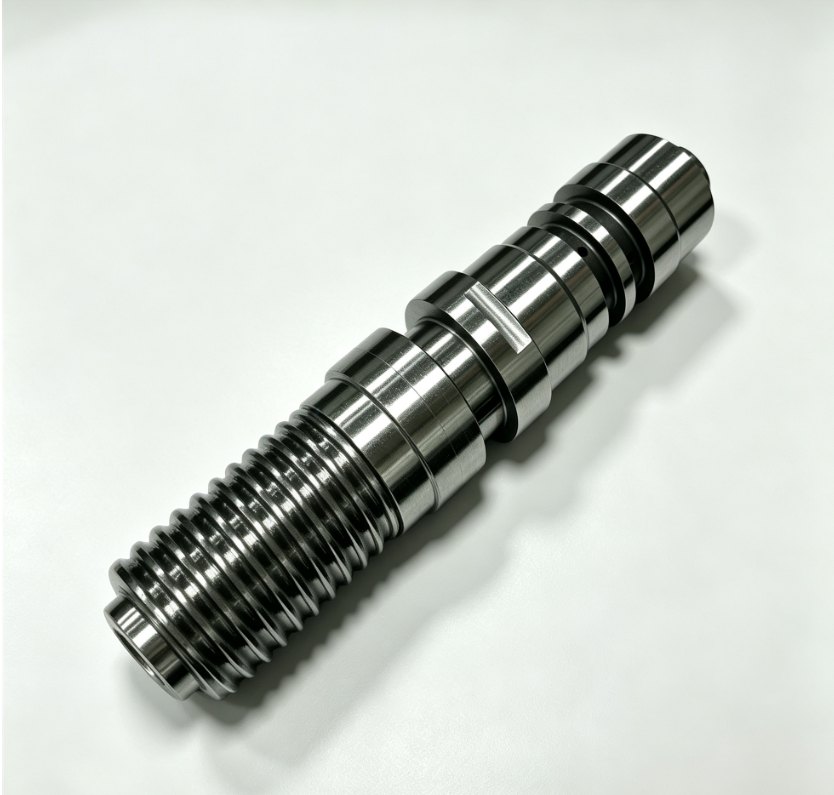
For threaded parts, ask how rotation synchronizes with mold opening. Include maintenance intervals for slides, lifters, ejector pins, and rotating cores.
Mold lead time becomes useful when it is split into reviewable milestones. Ask for dates for DFM approval, steel ordering, mold design release, rough machining, finish machining, assembly, T0, T1 sample, dimensional inspection, and final acceptance. A schedule with named owners gives you a way to act when a design decision moves.
The normal flow runs from product design and DFM review to mold design, tooling, trial molding, pilot production, mass production, and delivery. Front-end engineering can identify filling, venting, demolding, or warpage risks before steel cutting. The knowledge base lists about two to four weeks for standard T1 work and four to eight weeks for complex unscrewing or 2K projects. Confirm timing against your part and approval speed.
Request a shot record with resin lot, machine, mold temperature, pressure, cycle time, and cavity identification. Ask for measured dimensions, cosmetic photos, and open actions. A T1 sample starts validation; final acceptance follows stable molding conditions and agreed criteria.
Quality questions reveal how a supplier manages risk after the purchase order. Keep them specific so answers can be checked in drawings, reports, or sample parts.
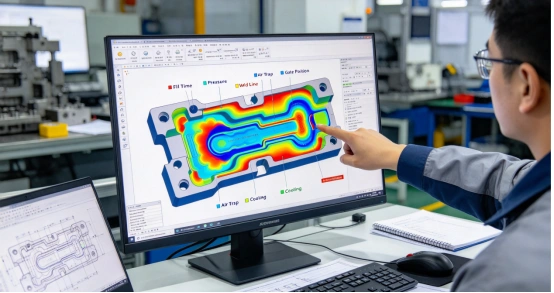
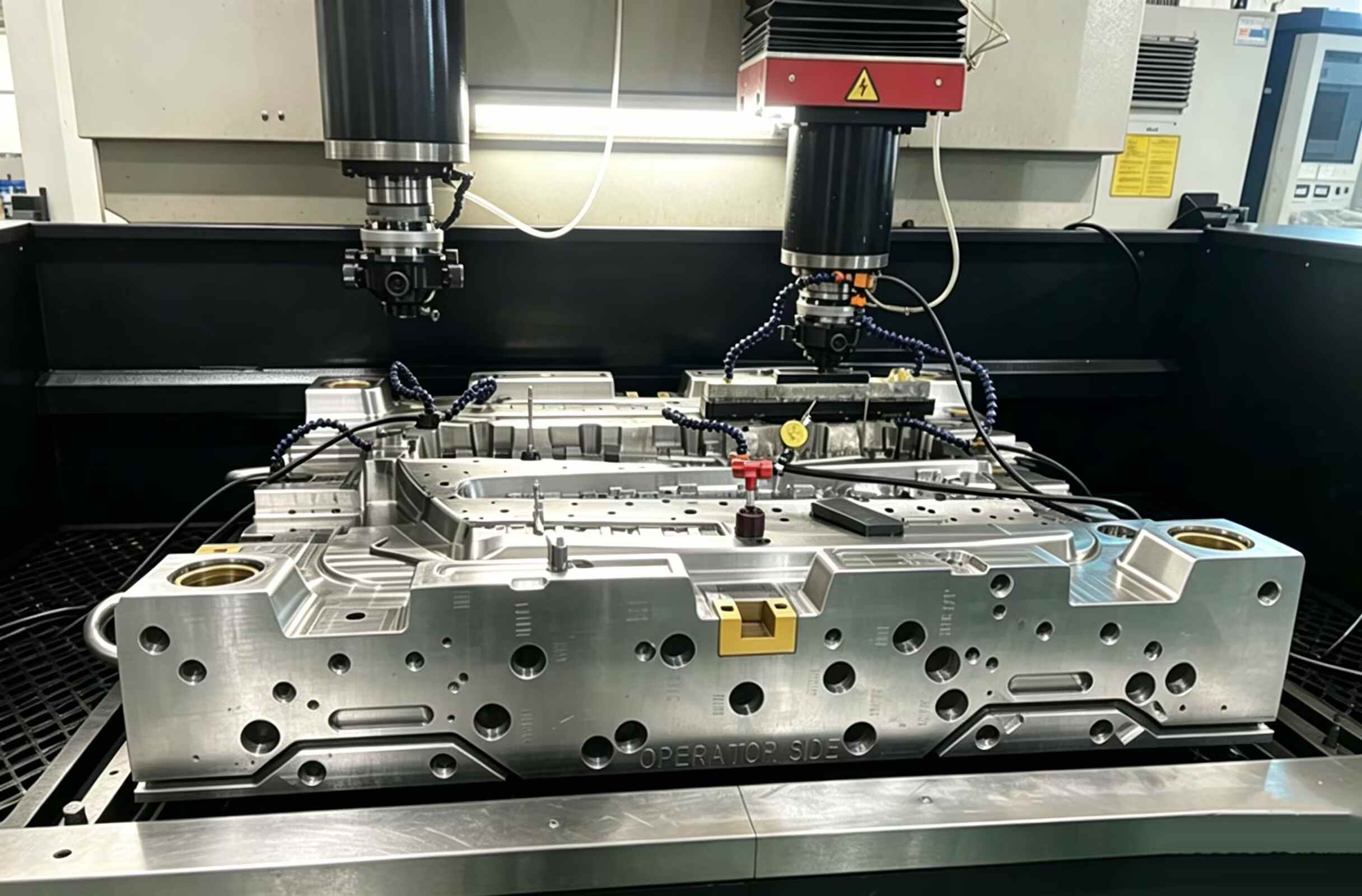
Ask how the supplier controls CNC, EDM, wire cutting, and assembly alignment. ±0.01 mm-level machining can support tight fit areas when the drawing and inspection method match the target. Ask for Moldflow outputs covering filling, pressure, weld lines, air traps, and cooling balance.
Your mold maintenance plan should name lubrication points, wear limits, rust protection, spare components, and service records. Confirm expected tool life for the selected steel and resin. At handover, request final drawings, cavity map, approved sample, process notes, inspection data, and maintenance schedule.
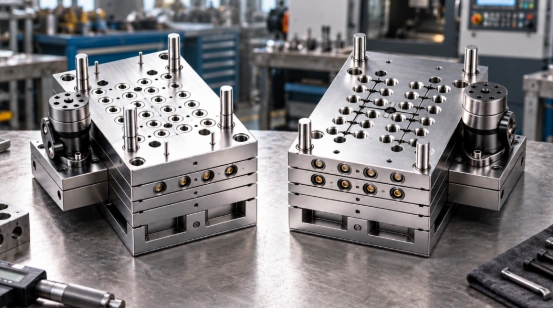
Build a weighted comparison sheet with five groups: technical scope, quality controls, schedule, ownership cost, and communication. Score each quote against the same requirements.
Add the cost of engineering changes, spare parts, freight, trial resin, and expected maintenance. Then review the two highest-risk assumptions with each supplier in a short design meeting. This approach turns an injection mold quote comparison into a documented decision that your engineering and purchasing teams can share.
Quote confidence rises when the supplier links price to the decisions that protect your launch. XINKEY MOULD uses a front-end engineering process with DFM and Moldflow review before tooling. Its internal design team works on wall thickness, draft, shrinkage, gates, runners, cooling, venting, ejection, and mold strength. That scope fits projects where a design must move into stable production.
For complex parts, the team supports sliders, lifters, inserts, threaded cores, automatic unscrewing, and 2K bi-injection structures. CNC work is controlled to a stated ±0.01 mm level, followed by assembly checks and trial molding verification. The company also supports rapid prototype molds and low-volume trial production, which gives you a practical step between a T1 sample and full production. You can review the relevant injection mold products when matching a quote to your part type.
Q1: What is the first document to request with a tooling quote?
A: Request a line-item scope with the mold layout, steel grade, cavity count, runner and gate plan, sampling plan, lead-time milestones, and exclusions.
Q2: How should you compare a hot runner and a cold runner quote?
A: Compare the complete system cost, cycle target, material waste, controller needs, maintenance access, and expected production volume.
Q3: What should a T1 sample package contain?
A: It should contain shot conditions, cavity identification, measured dimensions, cosmetic photos, sample quantities, and open corrective actions.
Q4: How does DFM analysis affect a mold quote?
A: DFM analysis identifies wall-thickness, draft, gate, venting, cooling, and demolding changes before steel cutting, so the quote reflects a workable mold structure.
Q5: Which mold maintenance details belong in supplier selection?
A: Check tool-life assumptions, lubrication points, wear-part limits, spare parts, service records, rust protection, and the handover documents supplied with the mold.
Related Posts



Contact Us