Low-Volume Injection Molding: On-Demand Production & Fast Tooling
23rd October 2026


 author
A reliable injection mold tooling service should solve problems before steel is cut. If wall thickness, draft, undercuts, gate location, or cooling are missed, tooling can become a costly troubleshooting loop.
Good custom injection mold tooling connects DFM analysis, injection mold design, precision mold manufacturing, mold trial, and mass production so you can make decisions earlier.

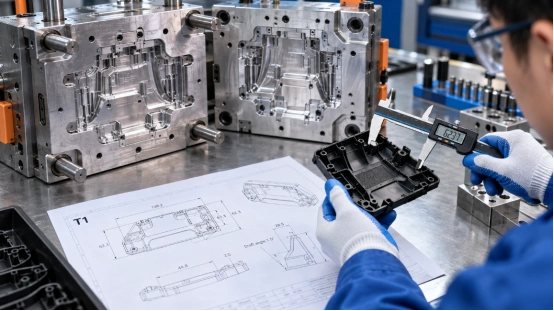
An injection mold tooling service turns a plastic part design into a production-ready tool. The work goes beyond machining core and cavity steel. It includes product review, mold structure design, runner and gate planning, cooling, ejection, machining, assembly, and testing. The practical question is simple: will the tool make acceptable parts repeatedly, not just one good sample?
Before plastic injection mold tooling begins, engineers review the part’s geometry and production target. A custom plastic injection mold may need one cavity, several cavities, side actions, inserts, or threading. The layout depends on part shape, resin behavior, volume, surface needs, and tool life.
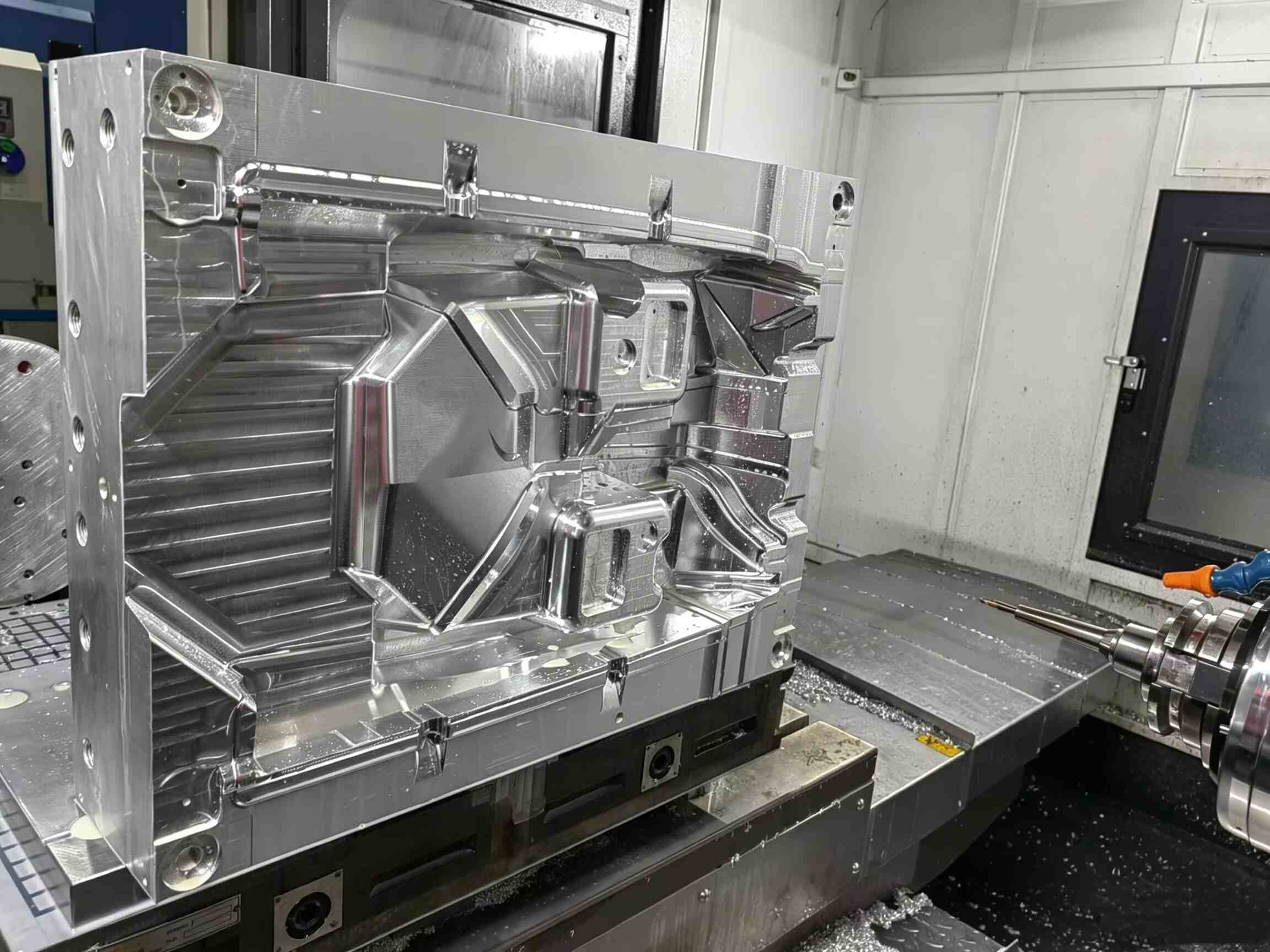
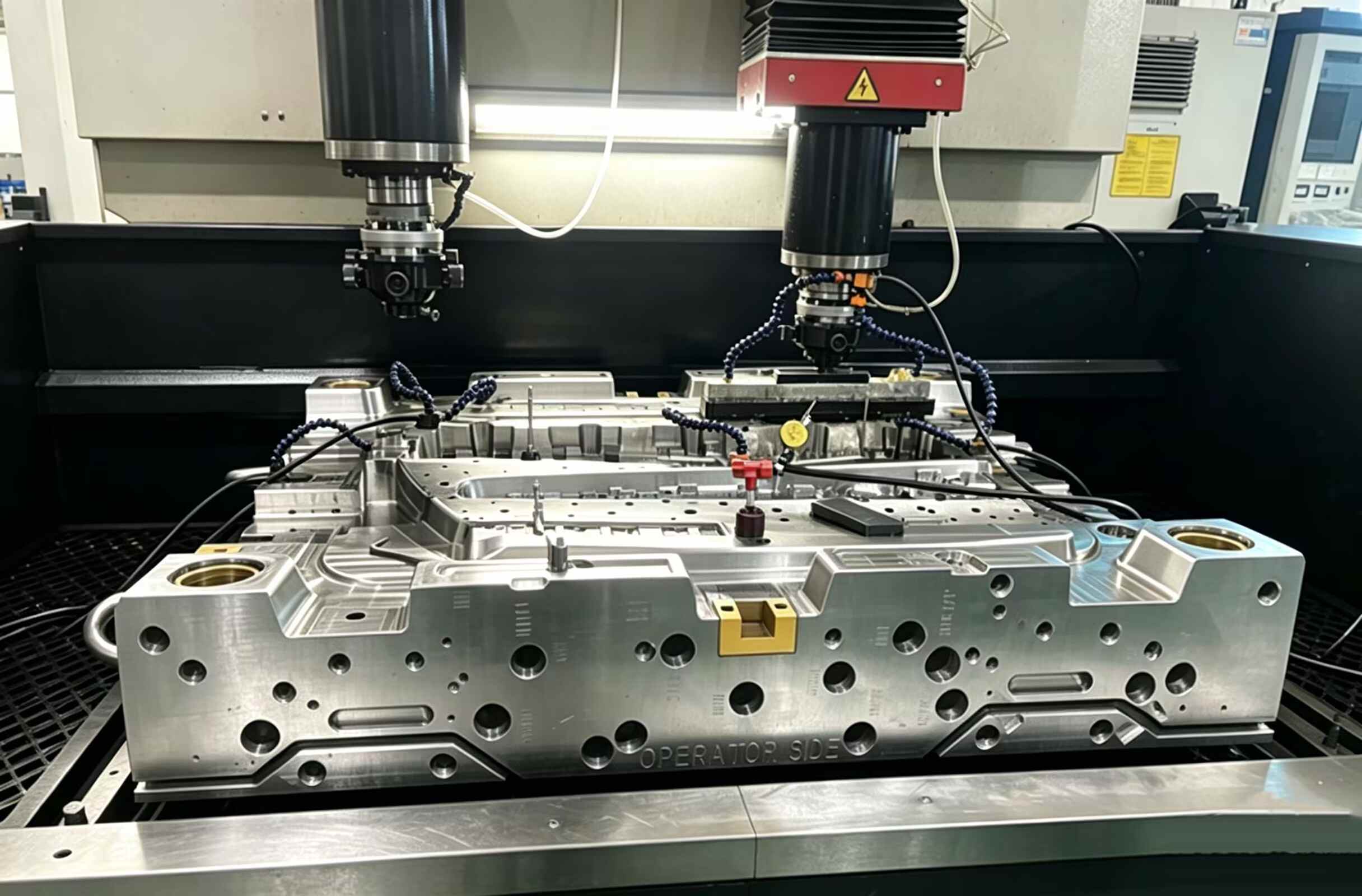
A precision injection mold also depends on machining accuracy and fitting. CNC machining, EDM, wire cutting, heat treatment, polishing, texture work, assembly, and inspection all affect final part dimensions. Injection mold making works best as one connected engineering job, not a list of separate workshop steps.
A part can look correct on screen and still create sink marks, warpage, drag marks, short shots, or difficult demolding. Professional DFM analysis catches many of those risks before machining. A small design change at this stage may avoid a much more expensive mold change after T1.
A complete injection molding DFM review should cover wall thickness, draft angle, ribs, bosses, undercuts, parting line, gate location, ejection, likely defect areas, and the first mold concept. This Design for Manufacturing analysis also asks whether part complexity is necessary. A slider can solve an undercut, sure, but removing it may produce a simpler, more reliable tool.
You can use a professional DFM analysis to review manufacturability before committing to steel.
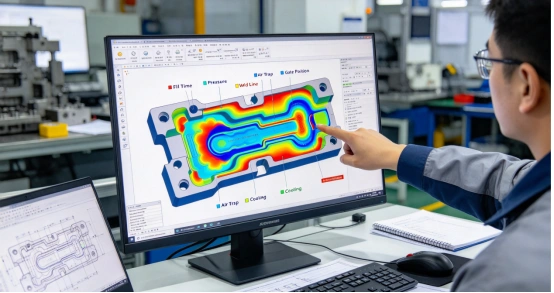
DFM checks whether the part and tool concept make practical sense. Mold flow analysis looks at how the resin may behave during filling, packing, and cooling. For complex parts, injection molding simulation can reveal problems that are hard to judge from geometry alone.
Typical checks include filling balance, pressure, weld lines, air traps, shrinkage, warpage, runner balance, and cooling. A poor gate can leave one region short while another is packed too hard. Uneven cooling can add cycle time and pull a part out of shape.
These findings feed back into injection mold design before machining, perhaps changing a gate, wall transition, cooling channel, or ejection plan.
Not every product needs an elaborate mold. The best custom injection mold tooling is the simplest structure that meets functional, cosmetic, volume, and tool-life targets. Complex parts, though, often need more.
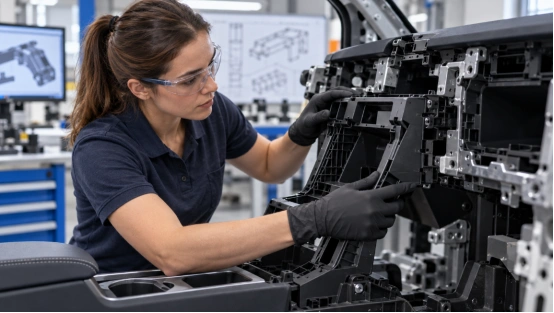
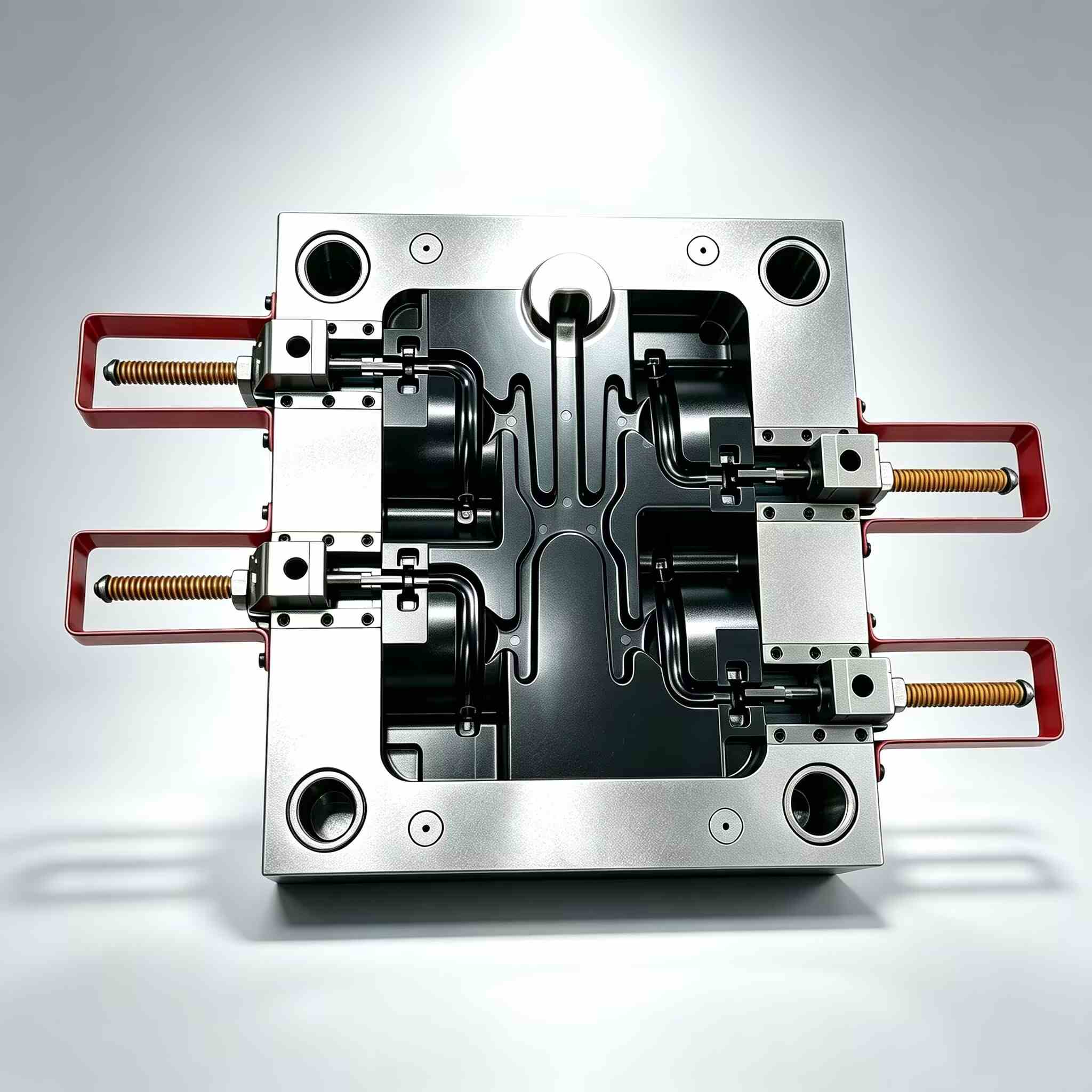
A multi-cavity injection mold can raise output when cavity balance is properly managed. A slider and lifter mold can release undercuts that block straight ejection. A threading mold can handle internal or external threads without manual secondary work. These structures need careful motion, locking, wear, and maintenance planning.
Insert molding tooling can lock metal inserts, terminals, shafts, or magnets into plastic during molding. A two-shot injection mold can combine two materials in one molding cycle for sealing, soft-touch, or two-color parts.
A hot runner mold can reduce runner waste and suit higher-volume programs, while a cold runner mold may offer a simpler tooling approach for some projects. The choice should follow resin, geometry, gate needs, volume, maintenance, and budget.
Even a sound design can fail if machining, assembly, cooling, or fitting drifts. Precision mold manufacturing carries approved engineering into steel, then checks the tool through mold trial.
Tool steel should match production volume, resin, wear, surface finish, temperature, and corrosion needs. Common selections include P20, H13, S136, NAK80, 1.2343, 1.2344, and 8407. High-precision CNC machining, EDM, heat treatment, and controlled fitting help keep core, cavity, sliders, guides, and ejection working together.
Cooling deserves special attention. Poor thermal balance can lengthen cycle time and increase warpage risk. Likewise, weak venting can contribute to air traps and burn marks. Small details on a drawing can become daily production problems.
A clear injection mold tooling process gives you decision points before costs become difficult to reverse.
A practical sequence is: CAD review, DFM analysis, mold flow analysis when needed, mold concept and quotation, detailed injection mold design, machining, assembly, T1 mold trial, correction, pilot production, and mass production. The first T1 mold trial provides real data on filling, dimensions, appearance, ejection, and cycle behavior.
If the project needs a custom plastic injection mold, send material, annual quantity, critical tolerances, cosmetic requirements, target tool life, and available 2D or 3D files. That makes an injection mold tooling quote more useful than a price based only on part size.

Once the engineering path is clear, supplier capability matters because design decisions must survive machining, assembly, and production. A custom mold tooling manufacturer should be able to review the product before tooling, handle complex structures in-house, test the mold, and support corrections after sampling.
XINKEY MOULD has more than 25 years of mold-making experience and an in-house design team. Its documented scope includes DFM review, mold flow analysis, mold design, CNC and EDM machining, mold assembly, trial molding, and low-volume production support.
The company also works on threading, insert, overmolding, and two-material tooling. The useful point is having engineering and manufacturing handled as one workflow, which can cut communication gaps when a part changes between CAD review and T1.
Q1: What is an injection mold tooling service?
A: It handles the engineering and building steps required to change a plastic part design into a working production tool. This includes DFM, mold design, and machining. It also involves assembly, testing, and final fixes.
Q2: How much does custom injection mold tooling cost?
A: The price relies on part size, cavities, steel choice, and tolerance. Surface finish, side actions, runner type, and tool life also matter. Always get a DFM review before setting a final price.
Q3: What is the difference between DFM analysis and mold flow analysis?
A: DFM analysis looks at manufacturability and tooling ease. Meanwhile, mold flow analysis checks resin filling and pressure. It also studies weld lines, air traps, shrinkage, warpage, and cooling habits.
Q4: How long does injection mold making take?
A: Wait time depends heavily on mold size and difficulty. A basic mold finishes much faster. Tools with multiple sliders, threading, inserts, or two-material setups just take more time.
Q5: How do you choose a custom injection mold manufacturer?
A: Search for a team with great front-end DFM and smart mold structure design. You also want in-house precision machining and trial capability. Clear engineering chats and solid support during production are huge pluses.
Related Posts



Contact Us