对工具未来的洞察

了解最新的行业趋势、技术提示和公司新闻
联系我们
mold maintenance

Injection Mold Maintenance: Essential Checklist and Best Practices

  • Injection Mold Maintenance: Essential Checklist and Best Practices 作者
  • 28th 4 月 2026

Stop “Firefighting”: The Real ROI of Disciplined Injection Mold Maintenance

Think of your injection mold as the high-performance heart of your factory. When it’s properly maintained, everything runs smoothly. When it’s neglected, it quickly turns into a liability—driving up scrap rates, causing downtime, and triggering costly emergency repairs at the worst possible moments.

A disciplined maintenance routine isn’t just about cleaning steel. It’s about protecting your production schedule and extending the life of one of your most expensive assets.


The Harsh Reality of the Press

Molds are precision tools operating in extremely harsh conditions. Every day, they endure massive clamping forces and repeated thermal shocks, sometimes exceeding 300°C. At the same time, abrasive materials—especially glass-filled resins—continuously wear down steel surfaces.

When maintenance is ignored, problems don’t appear gradually—they escalate. Minor wear turns into galling pins, stuck sliders, and blocked vents. Once vents clog, trapped gases cause burns and defects, pushing production into a downward spiral.

Even cooling channels aren’t immune. Over time, mineral deposits restrict flow, reducing cooling efficiency and affecting part quality. Compared to the cost of a full rebuild or losing a customer, preventive maintenance is minimal.


The Pre-Flight Checklist: Daily Production Habits

Before starting production, take a few minutes for a basic inspection—just like a pilot’s walk-around before takeoff.

Check for obvious issues such as:

  • Broken ejector pins
  • Chipped or damaged inserts
  • Worn or misaligned sliders

Skipping this step is a risk. Catching small issues early is far easier than dealing with major failures during production.

During the run, don’t just watch parts—watch the process. Unexpected dimensional shifts or rising scrap rates are early warning signs. Address them immediately before they escalate.

Key daily checks include:

  • Thermal Health:
    Verify coolant flow and temperature consistency. Abnormal inlet/outlet differences may indicate blockages or scaling.
  • Tool Cleanliness:
    Clean parting lines and cavity surfaces regularly. Avoid using metal tools on polished surfaces—minor damage can permanently affect finish quality.

The Weekly Battle Plan

Staying ahead of wear requires consistent, structured maintenance.

Each week:

  • Clean and lubricate all moving components (sliders, lifters, gibs)
  • Remove debris and old grease buildup
  • Clear vent channels using compressed air

Blocked vents lead directly to burn marks and scrap—this step is critical.


Monthly & Quarterly Maintenance

Monthly (Trend Monitoring):
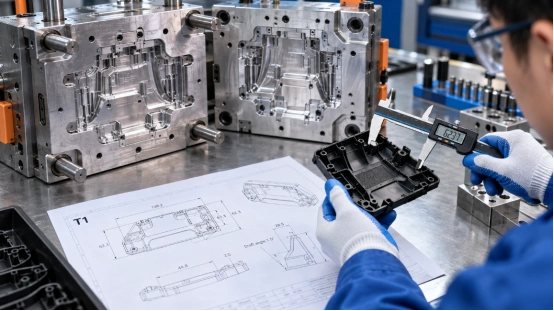
Use calibrated measuring tools to track critical dimensions. Identifying gradual drift helps prevent unexpected failures.

Quarterly (Deep Maintenance):

  • Disassemble and inspect the ejection system
  • Check wear on guide surfaces
  • Clean and descale cooling channels
  • Replace any components showing early signs of fatigue

Annual Overhaul

Once a year, perform a full teardown and inspection.

Look for:

  • Corrosion or pitting
  • Surface degradation
  • Hairline cracks caused by fatigue

Equally important—review maintenance records. If the same component repeatedly fails, the issue likely lies in the design, not maintenance. At that point, redesign is the real solution.


“Tool-Killer” Mistakes We See Too Often

1. Using the Wrong Lubricant
Not all greases are suitable for molds. Incorrect products can damage steel or contaminate parts. Always follow manufacturer recommendations.

2. Over-Tightening Fasteners
Excessive torque can stretch bolts and damage inserts. Use a torque wrench and follow proper specifications.

3. Ignoring Cooling Systems
Cooling lines function like arteries. Scale buildup reduces efficiency, increases cycle time, and creates hot spots that affect part quality.

4. Skipping Maintenance Due to Production Pressure
Delaying maintenance during high-volume runs often leads to unplanned breakdowns—usually at the worst time. Scheduled maintenance is always more cost-effective than emergency repairs.


The Bottom Line: Maintenance Is Insurance

Injection mold maintenance isn’t a cost—it’s protection for your production stability.

A well-maintained tool will consistently outperform and outlast a neglected one. The difference shows up in uptime, quality, and long-term profitability.


Final Advice

Build a clear maintenance schedule and assign responsibility for every task. Accountability is what keeps systems running.

Shops that follow disciplined routines stay productive. Those that don’t end up constantly reacting to problems.

In the end, it’s simple:
You either control maintenance—or it controls your production.

目录

博客

相关文章

常见问题

A: 对于标准模具,需要2-4周。根据工程深度,拧松或2K模具等复杂项目可能需要4-8周的时间。
A: 是的,我们的22名内部工程师在收到您的3D文件后24小时内提供免费、详细的DFM报告。
A: 我们根据您的特定区域或项目要求,严格遵守DME、HASCO和LKM标准。
1111

联系我们


    产品
    联系人
    WhatsApp
    电子邮件