对工具未来的洞察

了解最新的行业趋势、技术提示和公司新闻
联系我们
mold (1)

Choosing the Right Mold Steel: A Practical Guide to Cost, Performance, and Tool Life

  • Choosing the Right Mold Steel: A Practical Guide to Cost, Performance, and Tool Life 作者
  • 5th 5 月 2026

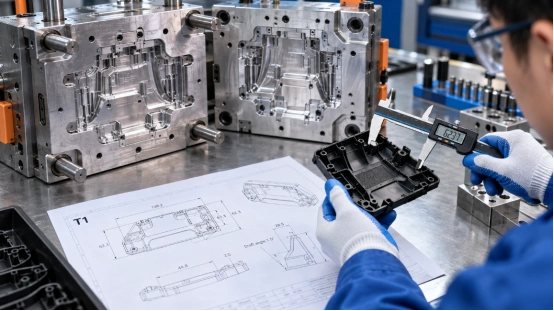
Choosing your mold steel isn’t just a technical box to check; it’s a high-stakes financial decision. The steel you pick dictates how long the tool lasts, how fast it cools, and—most importantly—how much you’re going to spend on maintenance down the road. You’re essentially balancing the “cost of the block” against the “cost of the millionth part.”

Here is how we look at steel selection on the shop floor.


1. P20: The Industry Workhorse

If you’re running a general-purpose project with a production volume under 500,000 shots, P20 is usually your best friend.

The beauty of P20 (1.2311 or 1.2312) is that it comes pre-hardened. You can machine it, sink your EDM, and it’s ready to go without a trip to the heat treater. This saves you weeks in lead time and keeps your upfront costs down. It’s tough enough for most consumer goods and electronics, but don’t expect it to hold a perfect mirror finish forever. It’s also prone to rusting if you’re in a humid environment or running “sweaty” cooling lines, so keep it oiled.


2. H13: The Heavy Hitter for High Volume

When you’re looking at millions of cycles—or you’re running abrasive resins at high speeds—you need to step up to H13.

Unlike P20, H13 is a “hot-work” steel. We machine it while it’s soft (annealed), then send it out for heat treatment to reach 44–52 HRC. This makes the cavity surfaces incredibly durable and resistant to “heat checking” (those tiny cracks that form after thousands of thermal cycles). Yes, it’s more expensive, and yes, the lead time is longer because of the hardening process, but it’s the only way to ensure the tool doesn’t fall apart before the project hits its ROI.


3. Stainless Steel: The Solution for “Nasty” Resins

If you’re molding PVC, flame-retardant materials, or anything that releases corrosive gases, 420 Stainless Steel (1.2083) is non-negotiable.

Regular tool steels will literally start to rot or “pit” when exposed to the acidic gasses released during the melt. Stainless steel is a nightmare to machine compared to P20, and it’ll cost you more upfront, but it’s the only way to avoid a scenario where your cavity finish is ruined after just a few weeks of production. It’s also the gold standard for medical and food-grade parts where cleanliness is everything.


4. Specialty Grades: S7 and Beryllium Copper

Sometimes, standard steel just doesn’t cut it.

S7 (The Tough Guy)

If your mold has thin, fragile shut-offs or is prone to “cold-start” impacts, S7 is your insurance policy. It’s incredibly shock-resistant—it’ll bend before it chips.

Beryllium Copper (The Heat Sink)

If you have a “hot spot” in your part that just won’t cool down, don’t use steel. We use Beryllium Copper inserts because they pull heat away three to five times faster than steel. It’s expensive and soft, but it can shave 5 or 10 seconds off a cycle time, which pays for itself in a month.


5. Aluminum: For the “I Need It Yesterday” Crowd

7075 Aluminum is great for prototypes or low-volume runs (under 10,000 shots). It’s lightning-fast to machine and pulls heat away beautifully. Just don’t expect it to hold tight tolerances for long, and definitely don’t try to run glass-filled nylon through it unless you want the cavity to look like it was hit with a sandblaster.


The Practical Takeaway: Match the Steel to the Life of the Part

The biggest mistake you can make is “over-speccing” a tool. You don’t need H13 for a 20,000-part test run, and you shouldn’t trust P20 for a 10-year automotive contract.

My Advice:

Know your volume: Be realistic about how many parts you’re actually going to make.

Look at your resin: If it’s abrasive or corrosive, let the material dictate the steel.

Talk to your mold maker early: We know which steels “behave” during machining and which ones are prone to cracking during heat treat.


At the end of the day, the incremental cost of better steel is a drop in the bucket compared to the cost of a tool that fails in the middle of a production rush.

目录

博客

相关文章

常见问题

A: 对于标准模具,需要2-4周。根据工程深度,拧松或2K模具等复杂项目可能需要4-8周的时间。
A: 是的,我们的22名内部工程师在收到您的3D文件后24小时内提供免费、详细的DFM报告。
A: 我们根据您的特定区域或项目要求,严格遵守DME、HASCO和LKM标准。
1111

联系我们


    产品
    联系人
    WhatsApp
    电子邮件