Low-Volume Injection Molding: On-Demand Production & Fast Tooling
23rd October 2026


 auteur
Lorsque vous entamez un projet de fabrication de produits en plastique, vous entendrez souvent deux mots principaux : outillage pour moules d'injection plastique et le moulage par injection. Ils travaillent en étroite collaboration. Mais ils résolvent des problèmes totalement différents.
L'outillage pour moules d'injection sert à fabriquer l'outil de production. Ce dernier est ensuite utilisé pour le moulage par injection afin d'éjecter les pièces en plastique. Un simple défaut lors de la fabrication de l'outillage a des répercussions sur l'ensemble de la chaîne de production : il compromet la qualité des pièces, fait grimper les coûts et retarde les livraisons.
Pour les acheteurs, la question pertinente n'est pas simplement « Combien cela coûte-t-il ? » Il faut plutôt se demander : « Quelle solution d'outillage correspond réellement à ma conception, à mes choix de matériaux et à mes objectifs à long terme ? »

Il est essentiel de bien distinguer la conception de l'outil de son utilisation. De nombreux retards de projet sont dus à une confusion entre ces deux tâches.
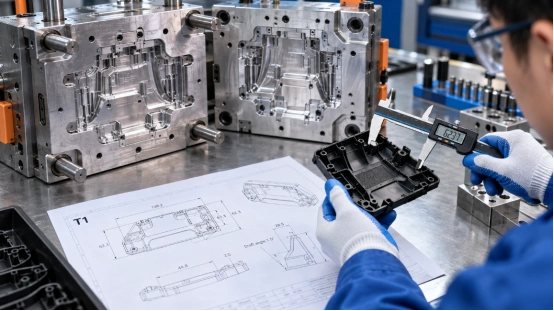
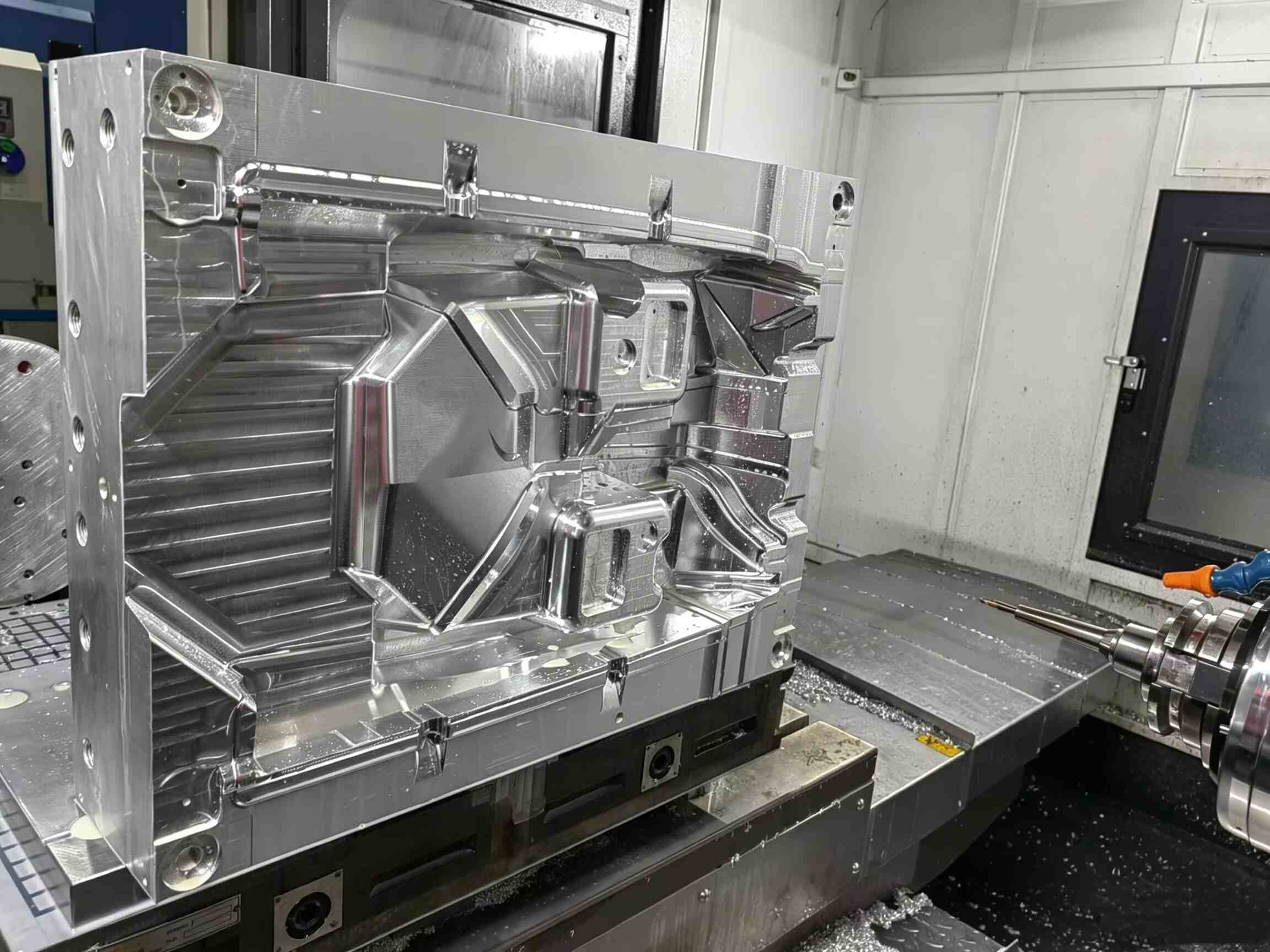
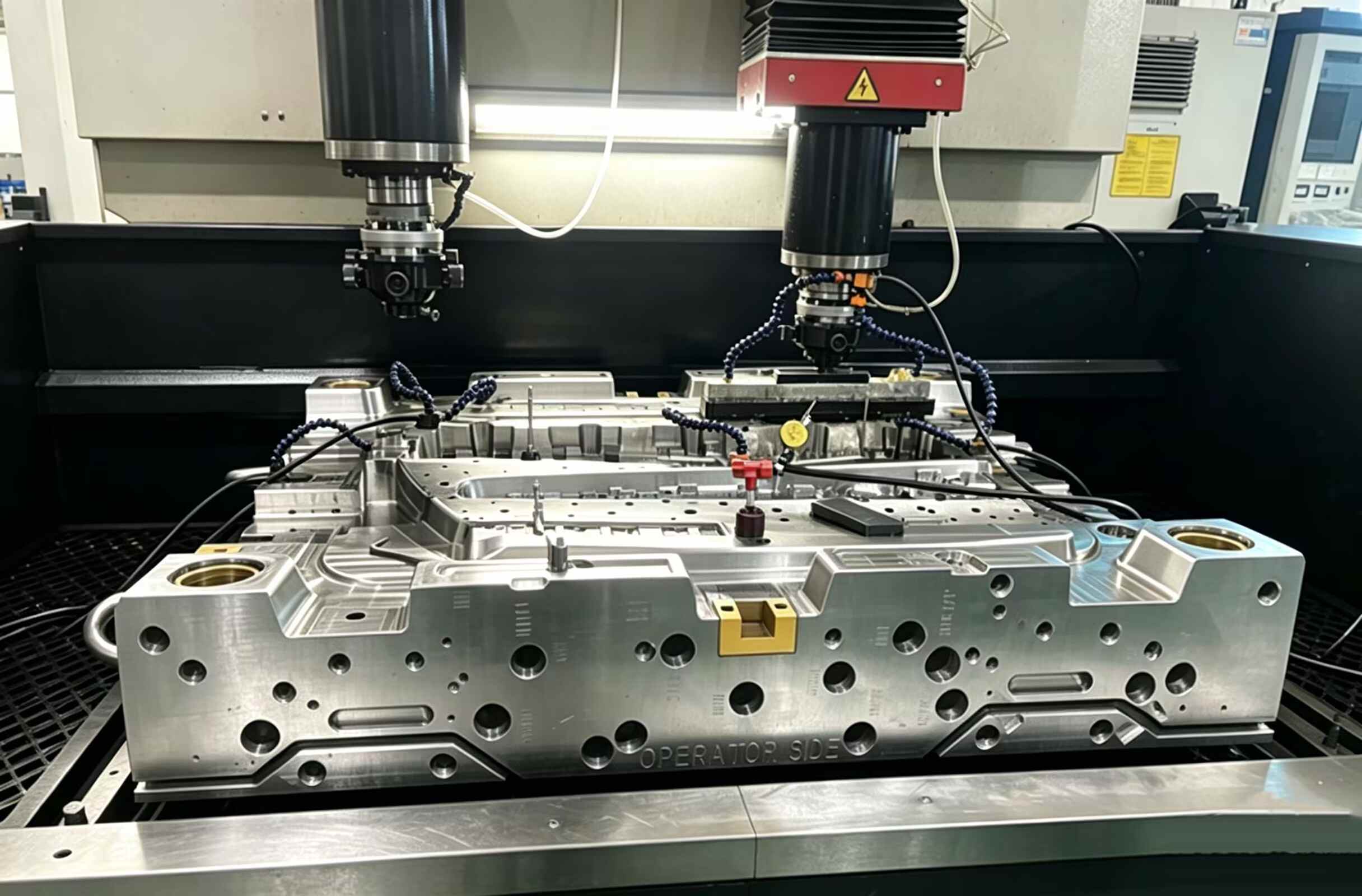
L'outillage pour moules d'injection plastique représente le travail d'ingénierie complexe nécessaire à la fabrication du moule lui-même. Cette étape délicate comprend la conception du moule, le choix de l'acier approprié, l'usinage CNC, la découpe par électroérosion, l'assemblage, les essais de moulage et les contrôles finaux.
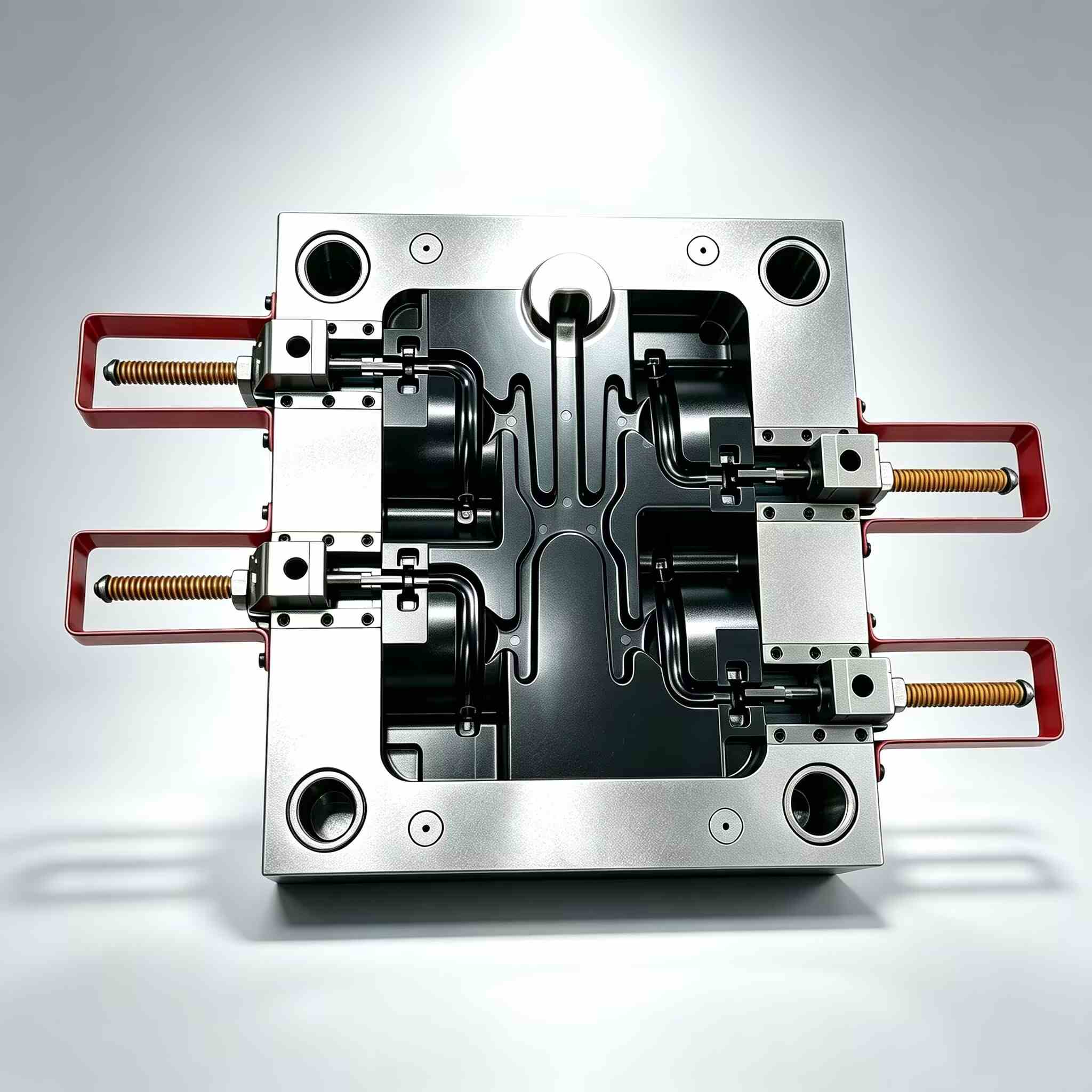
Le moule renferme de nombreux éléments essentiels : le noyau et la cavité, les canaux d’alimentation, les conduites de refroidissement et les broches d’éjection. Chaque pièce contribue à la stabilité de la production.
Un moule solide est bien plus qu'un simple bloc de métal usiné. Il constitue un investissement durable pour la production, conçu spécifiquement pour répondre aux besoins de votre produit. Par exemple, des pièces d'une grande complexité peuvent nécessiter des mécanismes de coulissement ou des systèmes de levage. Elles peuvent également faire appel à des noyaux filetés, au surmoulage ou à des procédés de moulage bi-injection complexes. Ces caractéristiques spécifiques modifient considérablement le coût final du moule et les besoins en maintenance.
moulage par injection Il s'agit du processus rapide qui permet de produire des pièces en plastique finies à partir de votre moule terminé.
Durant cette étape, la matière plastique atteint des températures extrêmement élevées. Elle est ensuite injectée dans la cavité du moule, refroidit rapidement et en sort sous forme de pièce solide. Ce procédé permet aux usines de produire rapidement de grandes quantités de pièces en plastique identiques.
La qualité de votre produit final dépend à la fois du processus de moulage et de la conception initiale du moule. Les défauts disgracieux tels que les marques d'écoulement, les retassures ou les déformations proviennent généralement de mauvais choix effectués dès la phase d'outillage.
La qualité de votre moule détermine la viabilité de votre nouveau produit en production de masse. Un outillage bon marché peut sembler attractif au premier abord. Cependant, un moule de mauvaise qualité engendrera d'énormes problèmes par la suite. Vous gaspillerez de l'argent en réparations incessantes, en outils cassés et en produits de piètre qualité.
C'est pourquoi les constructeurs avisés effectuent systématiquement une analyse DFM rigoureuse pour le moulage par injection avant toute manipulation d'acier. Vérifier l'épaisseur des parois et les angles de dépouille dès le début permet d'éviter des corrections coûteuses par la suite.
Le coût final de l'outillage pour moules d'injection varie en fonction de nombreux facteurs. La complexité de la pièce, la structure du moule, le métal utilisé, le brillant de surface et le volume de production total prévu sont autant d'éléments déterminants.
Un moule à cavité unique très simple coûte beaucoup moins cher qu'un outil multicavités massif conçu pour des millions d'injections.
Les principaux facteurs de coûts sont les suivants :
Géométrie et complexité des pièces
Taille du moule
Nombre de cavités
sélection d'acier à moule
exigences relatives à la finition de surface
Configuration à canaux chauds ou à canaux froids
Pièces supplémentaires comme des glissières ou des élévateurs
Si une pièce présente des contre-dépouilles complexes, elle nécessite des moules de précision. Si elle doit avoir un fini miroir, les ouvriers doivent la polir à la perfection. Choisir le moule le moins cher n'est jamais la meilleure solution. Il faut choisir celui qui correspond à vos plans de production.
Les acheteurs demandent souvent quelle est la durée de vie d'un moule d'injection. La réponse honnête dépend de sa conception, de sa qualité de fabrication et de son entretien quotidien.
La durée de vie d'un moule d'injection se mesure en cycles de production, et non en années calendaires. Le choix de l'acier et du matériau plastique influe considérablement sur la durée de vie de l'outillage.
Quelques facteurs principaux modifient rapidement la durée de vie d'un moule d'injection :
sélection d'acier à moule
Différents métaux sont nécessaires pour différents travaux. Les constructeurs utilisent souvent du P20, du H13, du S136 ou du NAK80. Choisir le bon métal permet de limiter l'usure et d'éviter les déformations.
matière plastique
Les plastiques techniques résistants chargés de fibres de verre érodent rapidement les parois des moules. Il est impératif d'en tenir compte dès la conception.
Structure du moule
Les conduites de refroidissement et les pièces mobiles doivent être parfaitement alignées. Un mauvais refroidissement allonge le temps de cycle et endommage les pièces.
Entretien
Nettoyer et huiler la moisissure permet de la maintenir en vie. Un bon entretien de la moisissure protège efficacement votre investissement.

Un processus de fabrication de moules par injection performant commence bien avant la mise en marche des machines. L'objectif est de détecter les risques au plus tôt.
Un atelier spécialisé effectue d'abord une analyse DFM. Les ingénieurs examinent attentivement :
Épaisseur de paroi
Angles de tirage
structure de la pièce
choix des matériaux
Risques liés à la fabricabilité
Cette ingénieuse solution résout le triste problème de concevoir un bel outil incapable de tirer du plastique.
Le parcours normal comprend :
revue de conception de produit
Analyse DFM
conception de moules d'injection
fabrication d'outillage
Moulage d'essai
Production pilote
production de masse
Un fournisseur possédant toutes les compétences nécessaires peut vous guider à chaque étape en toute sécurité.
Choisir un fournisseur de moules d'injection, c'est trouver un partenaire intelligent, et pas seulement comparer les prix.
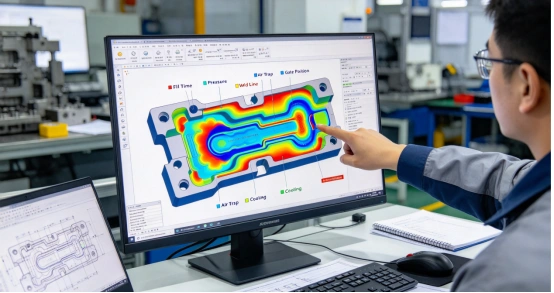
Un partenaire solide maîtrise à la fois la conception et le fonctionnement quotidien d'une usine. XINKEY MOULD bénéficie de plus de 25 ans d'expérience pratique dans la fabrication de moules. Son équipe d'ingénieurs experts effectue des analyses DFM et Moldflow approfondies dès les premières étapes de production.
Ils gèrent tout, de Moule d'injection plastique sur mesure De la conception à la production en série, en passant par les essais rapides, XINKEY MOULD privilégie la fabrication (DFM). Cela permet de réduire les coûts et d'assurer une stabilité parfaite des pièces finales. XINKEY MOULD vous offre une solution de fabrication complète et sécurisée pour vos pièces en plastique.
La meilleure stratégie dépend de votre stade de développement. Besoin de tests ? Optez pour un outillage rapide. Besoin de quelques pièces seulement ? Choisissez un moule basique et économique. Production à grande échelle ? Mieux vaut acheter de l’acier de qualité supérieure et prévoir une maintenance approfondie. Un plan d’outillage bien conçu permet d’éviter les dépenses inutiles et de commercialiser votre produit sans encombre.
Q1 : Quelle est la différence entre l'outillage de moulage par injection plastique et le moulage par injection ?
A : L'outillage pour moules d'injection plastique consiste à fabriquer le moule en acier massif. Le moulage par injection utilise ce moule fini pour produire des pièces en plastique.
Q2 : Quel est le coût de l'outillage pour le moulage par injection ?
A : Les coûts varient en fonction de la forme de la pièce, de la configuration du moule, du type d'acier, du nombre de cavités, des besoins en matière de brillance et du volume final d'injection.
Q3 : Quelle est la durée de vie d'un moule d'injection ?
A : La durée de vie d'un moule d'injection varie selon le métal, le type de plastique et la qualité de son nettoyage. Les moules utilisés pour la production en grande série durent bien plus longtemps que les moules d'essai bon marché.
Q4 : Pourquoi l’analyse DFM est-elle importante avant la fabrication du moule par injection ?
A : L'analyse DFM repère les défauts de conception majeurs avant même la découpe de l'acier. Elle permet d'éviter les corrections tardives et assure une grande stabilité de la production.
Q5 : Comment choisir le bon fournisseur de moules d'injection ?
A: Trouvez un atelier doté d'une grande expertise en ingénierie, de compétences pointues en conception, d'un contrôle rigoureux en usine et d'une véritable expérience en production de masse.
Articles connexes



Nous contacter