Low-Volume Injection Molding: On-Demand Production & Fast Tooling
23rd October 2026

 autor
autor
Seamos realistas: el enfriamiento no es solo una "fase" del ciclo de moldeo por inyección; es el ciclo en sí. Generalmente consume entre el 60 % y el 80 % del tiempo total en la prensa.
Si el sistema de refrigeración se descuida, básicamente se pierde dinero cada vez que se abre el molde. Un sistema bien diseñado marca la diferencia entre una producción a alta velocidad y una máquina de producir chatarra que genera piezas deformadas e inconsistentes.
Los moldes necesitan respirar, así de simple. Estás forzando un líquido a 250 °C dentro de una herramienta y esperas que se convierta en una pieza sólida como una roca casi instantáneamente.
Pero si la refrigeración no está perfectamente equilibrada, te espera un dolor de cabeza. Un lado se congela, el otro se estira y, de repente, la pieza de precisión se deforma como una patata frita.
Si buscas estabilidad dimensional, no puedes simplemente "esperar" una refrigeración uniforme; tienes que integrarla en la base de la herramienta.
Cada segundo que se ahorra en el ciclo de enfriamiento al optimizar los "puntos calientes" supone una inyección directa de beneficios en la vida útil del molde.
El objetivo es simple pero complicado: acercar el agua lo máximo posible a la cavidad sin comprometer la integridad estructural del acero.
Generalmente tratamos de mantener el centro de las líneas de enfriamiento aproximadamente A una distancia de 1,5 a 2 diámetros de la superficie de la cavidad..
Si está demasiado lejos, el calor persiste; si está demasiado cerca, corre el riesgo de una "explosión" catastrófica bajo la presión de la inyección.
Para paneles planos, una cuadrícula básica funciona bien. Pero para formas 3D complejas, las líneas de refrigeración deben imitar la geometría de la pieza.
Si la pieza es compleja, no dude en considerar la refrigeración conformada (insertos impresos en 3D).
Mira, el coste inicial del enfriamiento conforme es más elevado, pero es la única forma real de eliminar esos puntos calientes "irresolubles" que una broca tradicional simplemente no puede alcanzar.
Se trata de eliminar el cuello de botella antes de que se coma tus ganancias.
No te limites a abrir el grifo y asumir que la herramienta se está enfriando.
No se trata solo de flujo; se trata de turbulencia. Es necesario alcanzar un número de Reynolds superior a 4000 para disipar el calor del acero.
Si ese refrigerante simplemente "fluye lentamente" por las tuberías, no está haciendo su trabajo; básicamente solo estás haciendo circular agua tibia mientras que el tiempo de ciclo se ve afectado.
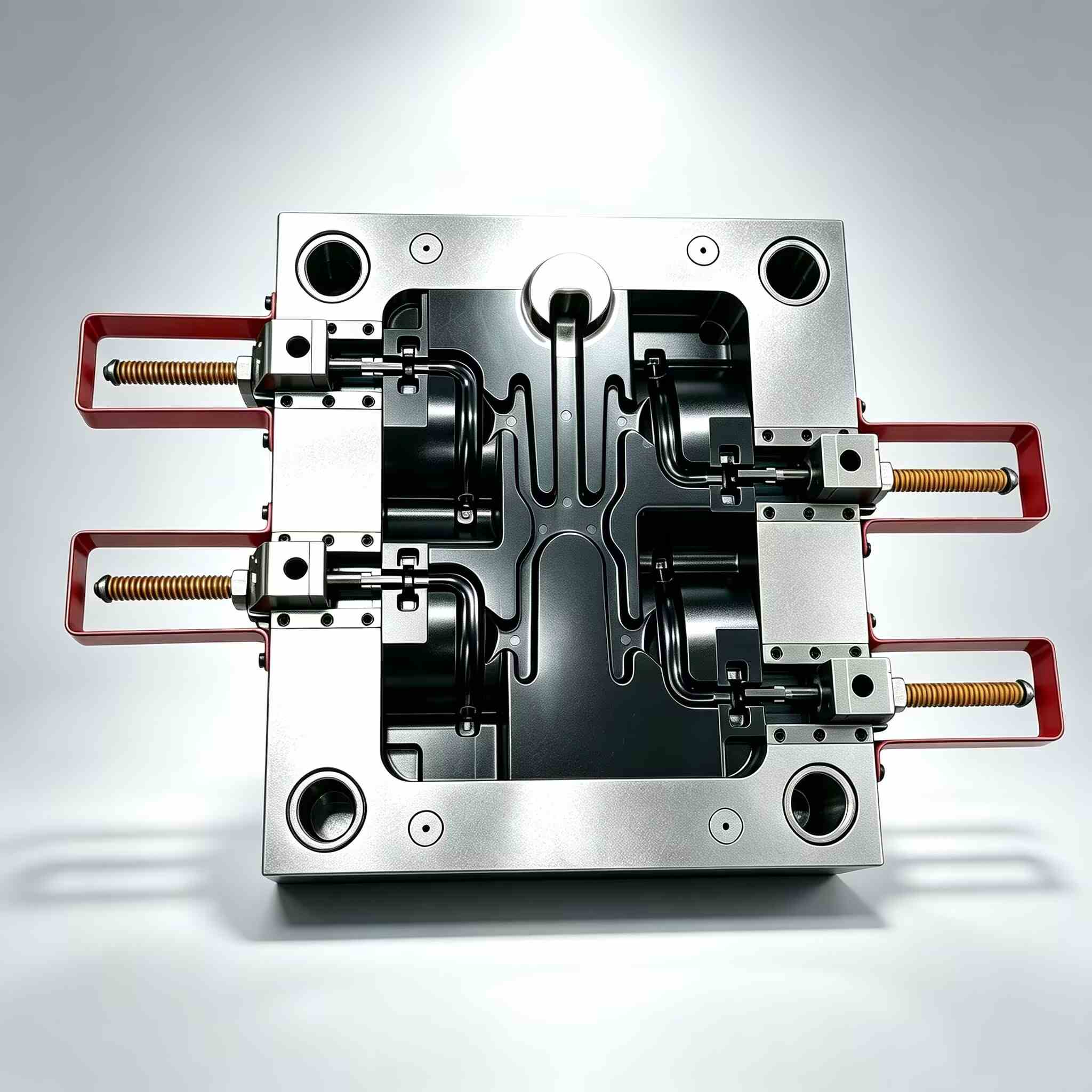
Los núcleos profundos y los espacios reducidos son una pesadilla para la refrigeración porque no se puede simplemente perforar un agujero recto. Hay que ser creativo con la instalación de tuberías:
Para perforar núcleos profundos y estrechos donde una broca estándar resulta inútil, utilizamos los Bubblers.
Básicamente, estás introduciendo un tubo por un agujero ciego para rociar agua directamente en el "punto caliente" en la punta.
El refrigerante golpea la parte superior y cae en cascada por la parte exterior del tubo.
Es la única forma real de evitar que esas estrechas ranuras se conviertan en trampas de calor que resequen el plástico y arruinen el ciclo.
Luego están los deflectores. Estos son esencialmente separadores de metal que se colocan en una línea de enfriamiento para evitar que el agua tome el "camino fácil de salida".
Al obligar al refrigerante a serpentear y arremolinarse alrededor de una hoja curva, se maximiza su contacto con el acero caliente.
Se trata de asegurarse de que el agua realmente dedique el tiempo suficiente a "frotar" el calor del moho antes de que salga por la ventana.
Si no puedes sacar estos insertos para limpiarlos, tienes un problema.
Con el tiempo, la caspa mineral y la suciedad se calcificarán dentro de estas líneas.
Si no las diseñas para que sean fáciles de mantener, verás cómo los tiempos de ciclo aumentan lentamente mes tras mes a medida que las "venas" de tu herramienta se obstruyen.
No esperes a que se produzca una obstrucción total para darte cuenta de que deberías haberlos hecho más fáciles de limpiar.
No espere a que el molde esté en la prensa para descubrir que se está sobrecalentando.
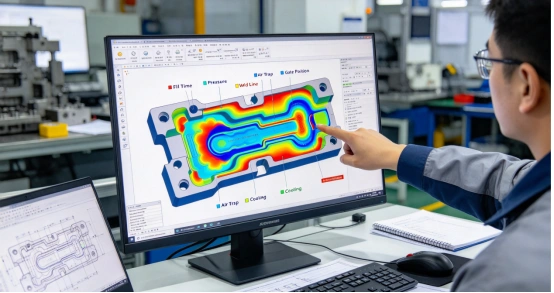
Utilice el análisis de flujo del molde para detectar "puntos críticos" antes de cortar cualquier pieza de acero.
Es mucho más económico mover una tubería de refrigeración en una rejilla que soldar y volver a perforar una cavidad endurecida.
En producción, controle la diferencia de temperatura entre la entrada y la salida.
Si observa un aumento de temperatura superior a 3 °C o incluso superior a 5 °C, su circuito está desequilibrado.
Un lado del molde está trabajando demasiado, mientras que el otro está funcionando sin esfuerzo.
La acumulación de incrustaciones dentro de las tuberías es como la hipertensión para el moho.
Utilice agua tratada para prevenir la aparición de algas y depósitos minerales.
Si sus tuberías se obstruyen, su eficiencia de transferencia de calor cae en picado.
Su sistema de refrigeración es el "motor" que impulsa el tiempo de ciclo.
Si lo tratas como un trabajo de fontanería secundario, lo pagarás con ciclos de reparación prolongados y piezas deformadas.
Trátalo como un sistema de gestión térmica de ingeniería de precisión y tendrás una herramienta que funciona rápido, se mantiene estable y genera dinero.
Invierta en el diseño del sistema de refrigeración durante la fase CAD.
Reducir dos segundos de un ciclo de 20 segundos puede no parecer mucho, pero en más de un millón de disparos, eso supone 550 horas de tiempo de máquina que acabas de devolver a tus ganancias.
Publicaciones relacionadas



Contacta con nosotros