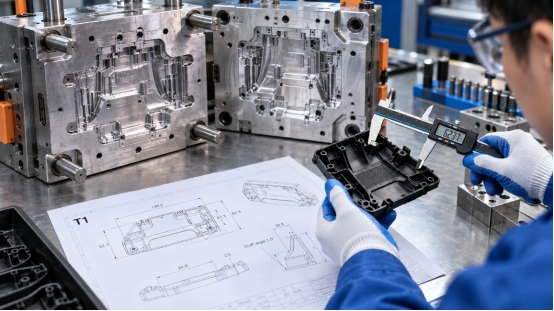
Low-Volume Injection Molding: On-Demand Production & Fast Tooling
23rd October 2026

 author
The cost to work with an injection mold manufacturer ranges from a few thousand dollars for a prototype tool to tens of thousands for complex production molds. A published tooling cost survey places basic aluminum tooling near $3,000 and machined steel tooling at $20,000 or more. Geometry, resin, cavity count, tool life, and production plan decide the quote.
A quote separates tooling from recurring molding costs.
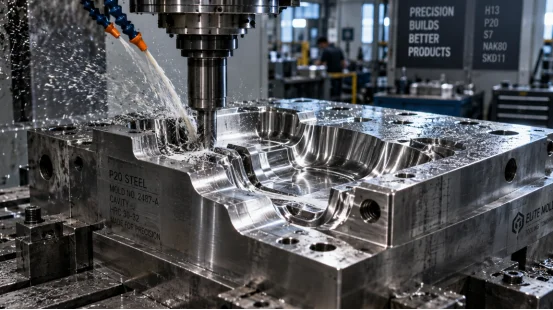
Your project cost covers engineering, fabrication, and validation. Ask each layer.
For a straightforward enclosure, a basic mold may sit in the low-thousands. Complex tooling with actions, inserts, tight tolerances, or many cavities can reach $20,000 to $50,000.
Size adds steel and machining hours. Precision adds inspection and EDM work. Tool life determines the steel and heat-treatment plan.
Suppliers quote differently when steel, cooling, runners, inspection, revisions, DFM, Moldflow, or T1 scope differs.
Your production volume changes the economics. A 7075 aluminum mold suits a prototype or a run under 10,000 shots; long-life steel spreads its higher starting cost across more parts.
A reliable quotation follows the project path from product design to mass production.
DFM checks wall thickness, draft, parting lines, gates, undercuts, and ejection before steel machining.
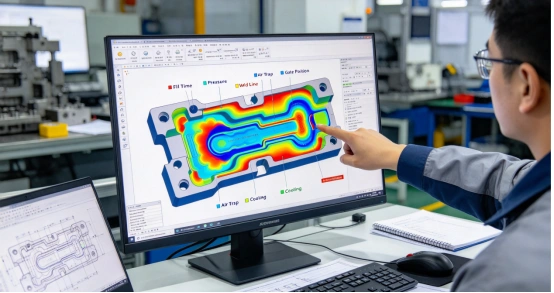
Moldflow analysis simulates filling, pressure, weld lines, air traps, and deformation, helping you find likely problems while the CAD model remains easy to change.
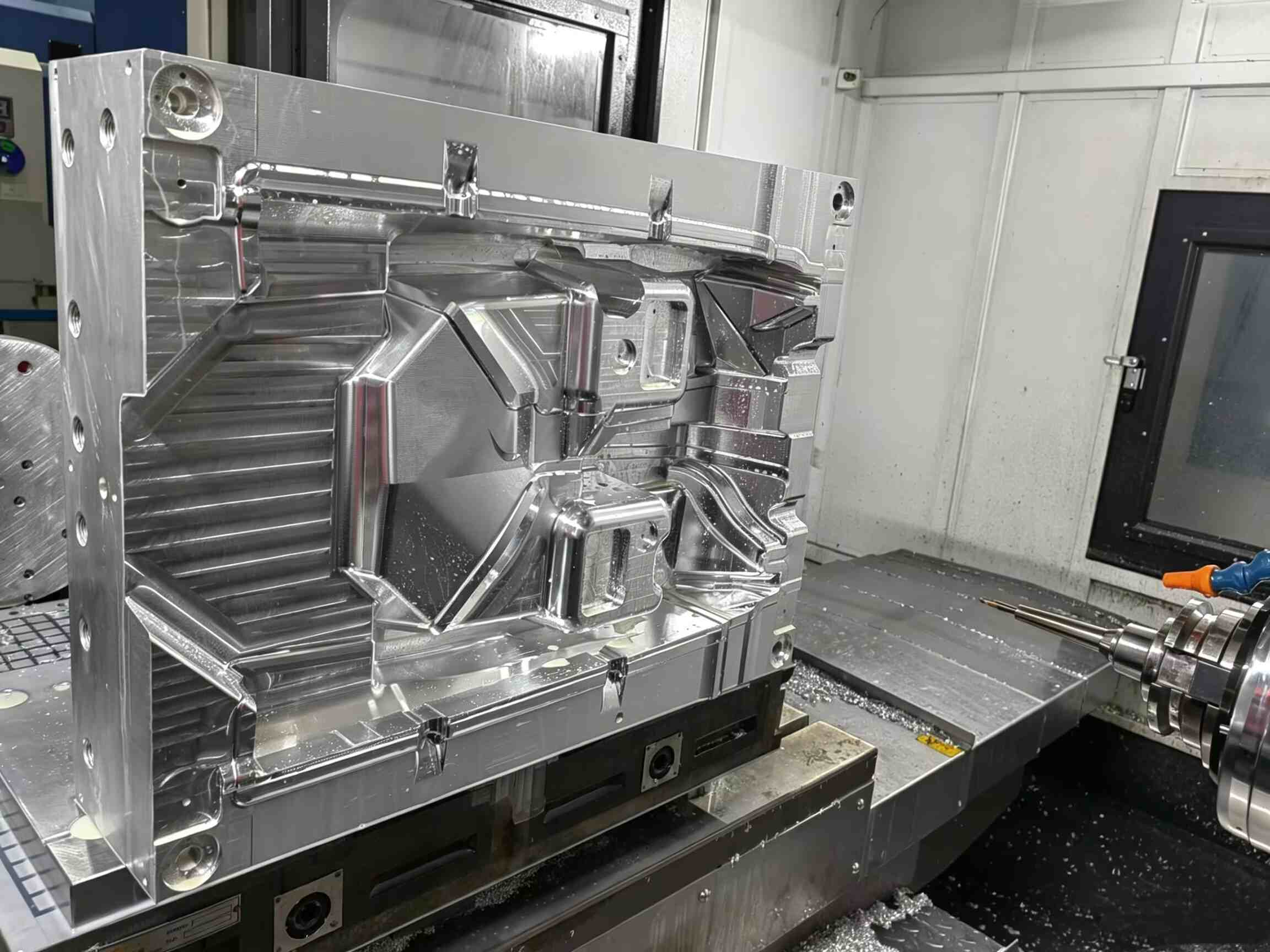
CNC forms most cavities and plates. Complex details may need EDM, wire cutting, grinding, and fitting. Simple molds take two to four weeks; complex tooling often needs six to eight.
The quote should identify the mold base, steel, runner system, actions, cooling, ejection, and surface finish. These items make a quote easier to audit.
T1 sampling reveals tool behavior with real resin and machine settings. Budget for inspection, mold correction, and another sample round when tolerances or flow paths are difficult.
The part often sets the tool price before the first cut.
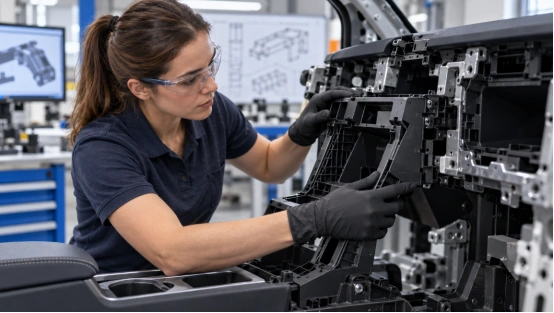
Deep ribs, thick bosses, sharp corners, internal threads, and undercuts add actions, cooling, and ejection work. Sliders and lifters solve these features while adding maintenance points. Multi-cavity molds reduce mold cost per part at higher demand.
Uniform walls cool evenly. Poor balance creates sink marks, warpage, short shots, or long cycles.
P20 suits general projects under roughly 500,000 shots. H13 suits millions of cycles or abrasive resins and needs heat treatment. S136 fits corrosive resins and clean applications. Aluminum machines quickly for prototype tools.
Cold runners keep tooling simpler. Hot runners reduce runner waste for high-volume molding, yet the manifold and controller add upfront cost. Ask for cycle time and scrap rate with each option.
Cooling can take 60 to 80 percent of a cycle. Channel placement and high-conductivity inserts shorten cooling. Ejectors must match the part to prevent whitening or distortion.
Polishing, texture, grain, and mirror finishes add preparation and inspection work. Specify the required appearance on the drawing.
Tell the manufacturer your launch run, annual demand, resin, and target tool life before selecting the mold type.
A prototype mold or aluminum tool can validate fit and function with a smaller initial spend. Rapid CNC or EDM work can produce a functional prototype in a few days.
High-volume work favors hardened steel, balanced runners, robust cooling, automated ejection, and repeatable inspection. An automatic unscrewing mold may cost more than a manual tool, yet saved labor and seconds per cycle can repay the difference within months.
Send the supplier your CAD files, 2D drawings, resin grade, annual volume, surface requirements, tolerance targets, and delivery date. Ask:
The clearest quote states assumptions and lead time through T1.
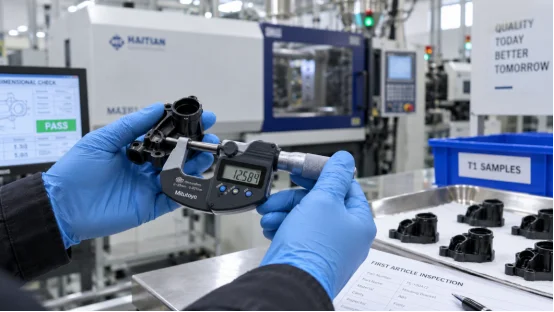
Early engineering keeps the budget tied to the part you plan to sell. A team that reviews structure, runs DFM and Moldflow, designs cooling and ejection, machines the tool, and supports T1 can solve issues before steel changes.
XINKEY MOULD follows this connected workflow through custom plastic injection mold development. Its engineers review wall thickness, draft, gates, runners, undercuts, and production risks before tooling. The process covers mold design, CNC and EDM machining, trial molding, correction, and low-volume production.
The approach also fits 2K, insert, threading, and Bakelite molds, where pitch, shrinkage, temperature, venting, and wear affect later costs.
Q1: What is the typical injection mold cost for a simple part?
A: A prototype or aluminum tool may cost a few thousand dollars. Production steel costs more for tool life and machining.
Q2: Does DFM analysis add to injection molding engineering cost?
A: It may be separate or included in tooling. It checks key risks before machining.
Q3: Is a hot runner system worth the extra mold tooling cost?
A: It suits high-volume work where runner waste and cycle time matter. Cold runners fit simpler projects.
Q4: How does mold steel selection affect maintenance cost?
A: P20 fits general tools, H13 supports high-cycle work, and stainless grades handle corrosive resins.
Q5: What information helps a manufacturer provide an accurate quote?
A: Share 3D CAD, 2D drawings, resin, annual volume, cavity target, surface finish, tolerances, expected tool life, sampling needs, and delivery date. Clear inputs produce clearer assumptions and fewer price surprises.
Related Posts



Contact Us