Low-Volume Injection Molding: On-Demand Production & Fast Tooling
23rd October 2026

 author
If you’ve spent any time around an injection molding shop floor, you’ll notice one thing pretty quickly: everyone talks about quality, but the real game is time.
Cycle time isn’t just a number on the machine screen—it’s directly tied to cost, output, and ultimately, your profit margin. In many projects, cycle time doesn’t get much attention early on. By the time it becomes a concern, the mold design is already fixed and changes are costly.
In this article, we’ll walk through what cycle time actually means on the shop floor, what tends to slow it down, and where you can realistically make improvements—without risking part quality.
Mold cycle time refers to the total time required to complete one full injection molding process cycle. That includes:
In simple terms:
Cycle time is basically the time it takes from one mold close to the next shot.
At a glance, 25 seconds versus 30 seconds doesn’t raise alarms. But in continuous production, it adds up quickly. Over time, you end up with fewer cycles, which directly means less output from the same resources.
That’s where cycle time starts to matter—not on paper, but on your bottom line.
That’s why experienced mold designers don’t just design for “good parts”—they design for efficient cycles.
Cycle time isn’t controlled by a single parameter. It’s the result of multiple design and process decisions.
Cooling often takes up 60–80% of the total cycle time.
What influences it:
Thicker parts hold heat longer. Poor cooling layout makes it worse.
👉 If you want faster cycles, start with better cooling—not faster injection.
Design decisions made early on can lock in your cycle time.
Key design impacts:
Bad design = longer cooling + ejection problems.
Different plastics behave differently.
For example:
Choosing material without considering cycle time is a common mistake.
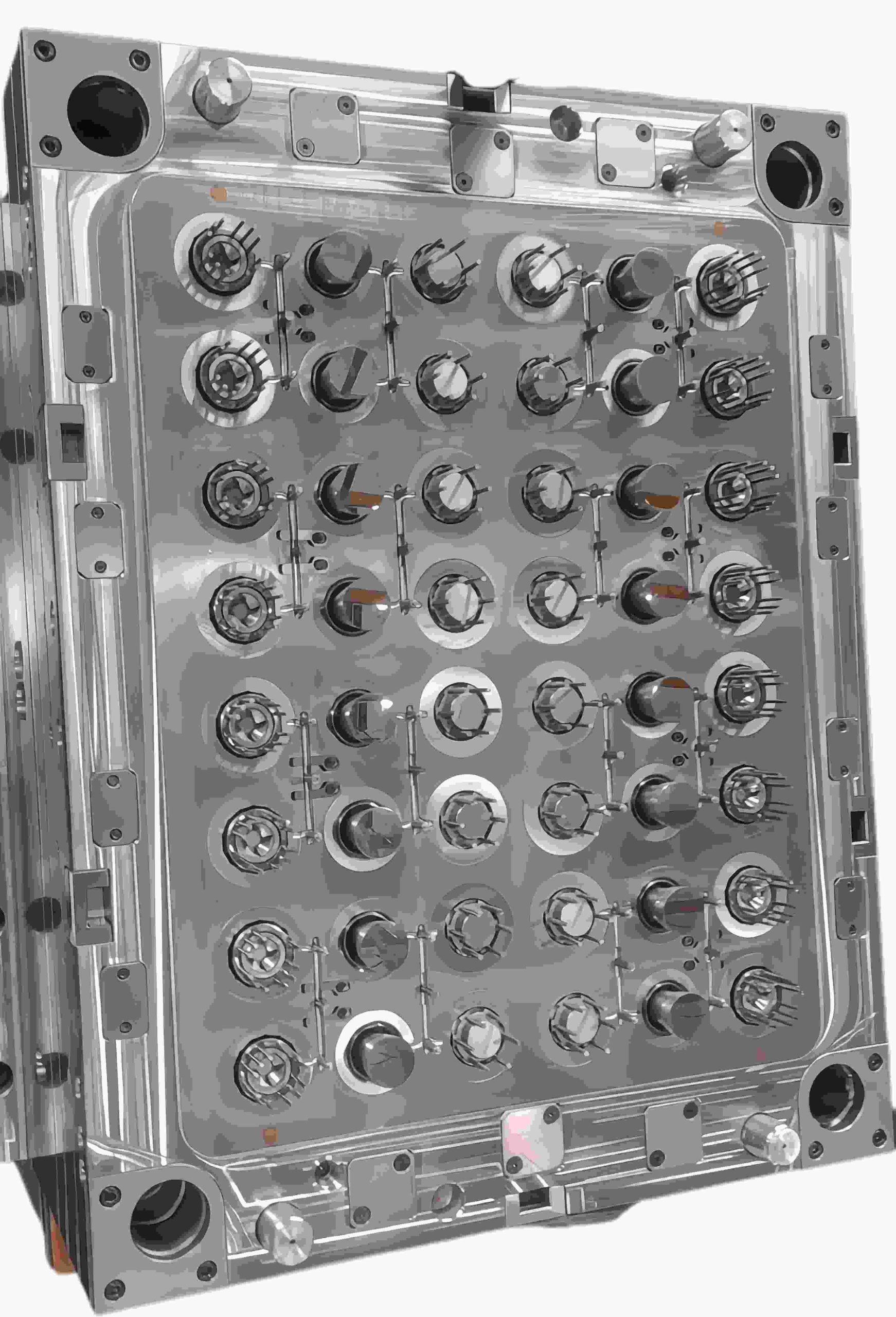
A well-built mold can dramatically reduce cycle time.
Critical elements:
An average mold “works.”
A well-engineered mold prints money faster.
Even with a perfect mold, poor machine settings can slow everything down.
Key parameters:
Fine-tuning matters—but it cannot fix bad design.
Here’s what actually works in real production environments:
👉 This gives the biggest ROI.
Even a small reduction can significantly cut cooling time.
Example:
3.0 mm → 2.5 mm can reduce cooling time noticeably
But always balance strength and function.
Better venting allows:
Which indirectly shortens cycle time.
These help remove heat faster.
Manual handling slows cycles more than people realize.
Let’s be honest—these happen all the time:
These decisions quietly eat into your margins.
Reducing cycle time too aggressively can backfire.
You may see:
The goal is not the shortest cycle—it’s the optimal cycle.
Mold cycle time is one of the most underestimated factors in injection molding profitability.
It’s not just a processing parameter—it’s the result of:
If you think about cycle time early—while the part and mold are still being designed—you give yourself much more room to optimize. Once the tooling is finished, improving it becomes a lot harder and more expensive.
Q: What is a “good” cycle time in injection molding?
A: There isn’t a single benchmark. It depends on the part—its size, geometry, and material. Simple, thin-wall parts can run quite fast, often under 20 seconds. Larger or thicker parts usually need more time, sometimes 40 seconds or more.
Q: What affects cooling time the most?
A: Most of the time, it’s the wall thickness and the cooling layout inside the mold. Thicker areas take longer to release heat, and if the cooling channels aren’t placed well, the delay becomes even more obvious.
Q: Why is my cycle time too long?
A: Common causes include thick parts, poor cooling design, conservative machine settings, or inefficient mold layout.
Related Posts



Contact Us