Low-Volume Injection Molding: On-Demand Production & Fast Tooling
23rd October 2026

 autore
Segni di flusso nello stampaggio a iniezione | Cause, risoluzione dei problemi e metodi di prevenzione per migliorare la qualità estetica dei componenti
Si può avere un componente che rispetta tutte le specifiche dimensionali e si adatta perfettamente, ma se la superficie è ricoperta di linee ondulate o striature antiestetiche, finirà dritto nel cestino degli scarti. In settori come quello automobilistico o dell'elettronica di consumo, dove l'aspetto estetico è fondamentale, questi motivi fantasmatici sono un vero e proprio difetto inaccettabile.
La parte più frustrante? I segni di flusso sono solitamente puramente estetici. Il pezzo è strutturalmente integro, eppure agli occhi del cliente viene comunque considerato un "prodotto da scartare". Se sei stanco di vedere i tuoi margini di profitto svanire in un mucchio di scarti estetici, devi capire esattamente perché il fronte di fusione ha difficoltà all'interno dello stampo.
In sostanza, un segno di flusso è una registrazione permanente di un fronte di fusione "esitante".
Pensate al fronte di fusione quando colpisce l'utensile: quello strato esterno è in una corsa costante contro l'acciaio freddo dello stampo. Se il flusso è troppo lento o il calore non è sufficiente a supportarlo, quel bordo anteriore non scorrerà, ma si fermerà.
Quando la resina più calda che si trova dietro finalmente avanza, lascia una cicatrice permanente sulla superficie. Quella linea ondulata o quel disegno ad anello che vedi è essenzialmente una mappa visiva di un flusso che ha lottato per ogni centimetro.
Non si tratta solo di un difetto estetico; è una prova inconfutabile che dimostra come il materiale stia soccombendo alla temperatura dell'utensile.
Secondo la nostra esperienza, questi segni si riscontrano quasi sempre negli stessi pochi punti critici.
Nella maggior parte dei casi, i segni di flusso compaiono in prossimità di:
A seconda del materiale e della struttura dello stampo, il difetto può presentarsi come segue:
Sulle parti lucide o di colore scuro, i segni di flusso sono generalmente più facili da notare.
Nel processo di pressatura, tutto dipende da un delicato equilibrio tra il flusso del materiale fuso e il raffreddamento dello stampo. Nel momento stesso in cui la resina inizia a trascinarsi o a raffreddarsi prima del previsto, la differenza sarà immediatamente visibile nella finitura superficiale.
Solitamente, la prima cosa che controlliamo è la velocità di riempimento.
Se l'iniezione è troppo lenta, è come perdere una corsa contro il tempo. Il bordo anteriore della plastica inizia a bloccarsi e a indurirsi, mentre il materiale più caldo dietro di esso cerca ancora di farsi strada in avanti.
Questo crea un effetto "balbettio" sul fronte di flusso, lasciando quelle caratteristiche increspature ondulate impresse sulla superficie del pezzo.
Un processo di riempimento più rapido e fluido riduce spesso in modo significativo le tracce di flusso visibili.
Se la temperatura del materiale è insufficiente, la viscosità della resina aumenta e la resistenza al flusso diventa maggiore. Il fuso non riesce a mantenere una superficie liscia mentre attraversa la cavità.
La bassa temperatura di fusione spesso causa:
Materiali diversi reagiscono in modo diverso al calore. Le materie plastiche tecniche richiedono in genere un controllo della temperatura più rigoroso rispetto alle resine comuni.
Una superficie dello stampo fredda fa sì che il materiale fuso si congeli rapidamente non appena entra in contatto con la parete della cavità. Lo strato superficiale si forma troppo presto, interrompendo il flusso regolare della resina.
Questo problema si presenta comunemente nella produzione invernale o negli stampi con uno scarso bilanciamento del raffreddamento.
Per i componenti cosmetici, la stabilità della temperatura dello stampo è spesso più importante della velocità del ciclo.
Il cancello è essenzialmente la "gola" del tuo strumento.
Se è troppo stretto o posizionato nel punto sbagliato, la resina non scorrerà nella cavità, ma si incepperà, creando un flusso caotico e instabile. Peggio ancora, i canali di iniezione sottodimensionati agiscono come ugelli ad alta pressione che "maltrattano" il materiale con un eccessivo stress di taglio, lasciando quelle antiestetiche striature che rovinano la finitura superficiale.
Una corretta progettazione del punto di iniezione migliora sia la stabilità del riempimento che la qualità estetica.
Quando il materiale fuso fluisce da una sezione sottile a un'area più spessa, la velocità di flusso cambia bruscamente. Questa transizione può alterare l'aspetto della superficie e lasciare linee di flusso visibili.
Anche i bruschi cambiamenti di spessore delle pareti aumentano l'irregolarità del raffreddamento.
Una buona progettazione dei componenti riduce molti difetti di stampaggio ancor prima che inizi la produzione.
Il gas intrappolato all'interno della cavità può interferire con il flusso del materiale fuso. Quando l'aria viene compressa, il fronte di stampaggio può esitare o cambiare leggermente direzione, lasciando dietro di sé difetti superficiali.
Sebbene i problemi di ventilazione siano più comunemente associati a segni di bruciatura, possono anche contribuire alla formazione di segni di flusso.
Una ventilazione adeguata favorisce un flusso di materiale più uniforme all'interno della cavità.
Alcuni tecnopolimeri assorbono rapidamente l'umidità dall'aria. Il materiale umido può causare un comportamento instabile del fuso durante lo stampaggio a iniezione, compromettendo la qualità della superficie.
Rapporti di rimacinazione incoerenti o resina contaminata possono inoltre aumentare i difetti di flusso.
Una qualità stabile del materiale è essenziale per ottenere risultati di stampaggio stabili.
Quando compaiono i segni di flusso, evitare di modificare più parametri contemporaneamente. Le regolazioni casuali solitamente rendono più difficile la risoluzione dei problemi.
Un approccio migliore consiste nel verificare il processo passo dopo passo:
Le registrazioni dei processi provenienti da precedenti cicli di produzione stabili possono anche aiutare a identificare più rapidamente le modifiche.
Prevenire è sempre più economico che correggere. Molti problemi relativi alle striature di flusso iniziano già durante la progettazione del pezzo o lo sviluppo dello stampo.
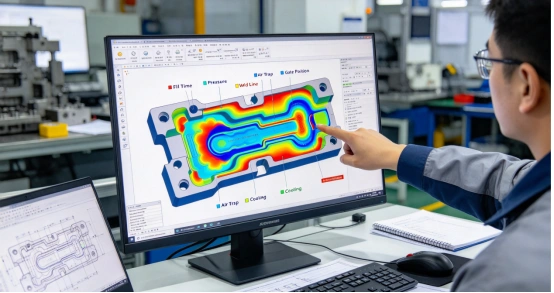
Quando l'estetica è imprescindibile, bisogna anticipare i problemi. Eseguire una simulazione del flusso di stampaggio nelle fasi iniziali non è solo un lusso, ma è il modo migliore per individuare questi problemi superficiali prima ancora di tagliare l'acciaio.
Credetemi, è sempre più economico ritoccare un progetto su uno schermo che saldare e rilavorare un utensile indurito una volta che è già a terra.
È facile liquidare un segno di flusso come "solo un problema estetico", ma è un gioco pericoloso. Quei motivi ondulati sono solitamente la prova inconfutabile di un processo fondamentalmente fuori sincrono.
Che si tratti di una discrepanza di temperatura o di un punto di iniezione troppo stretto, lasciare che questi "fantasmi" infestino i vostri pezzi è un modo sicuro per azzerare i margini di profitto con una montagna di scarti.
La verità è che non si può risolvere un problema di superficie semplicemente regolando una manopola a caso sulla pressa. La vera qualità è una questione di tutto o niente: è necessario che la progettazione dello stampo, il bilanciamento del riempimento e il calore lavorino in armonia.
Basta con le supposizioni, individuate la vera causa principale e smettetela una volta per tutte di "spegnere le fiamme".
È così che si ritorna a una produzione stabile e redditizia.
Articoli correlati



Contattaci