Low-Volume Injection Molding: On-Demand Production & Fast Tooling
23rd October 2026

 auteur
Si vous fabriquez des pièces avec filetage interne ou externe (raccords de tuyauterie, bouchons cosmétiques ou vannes industrielles, par exemple), vous savez que l'étape de dévissage constitue le principal goulot d'étranglement du cycle d'injection. Dans de nombreux ateliers classiques, cette opération est encore réalisée manuellement ou par des étapes secondaires lentes.
Chez Xinkey Mould, nous considérons le filetage non pas comme une simple caractéristique, mais comme un défi mécanique complexe à automatiser. Voici pourquoi la conception d'un système de dévissage automatique représente le meilleur investissement pour la production en grande série de pièces filetées.
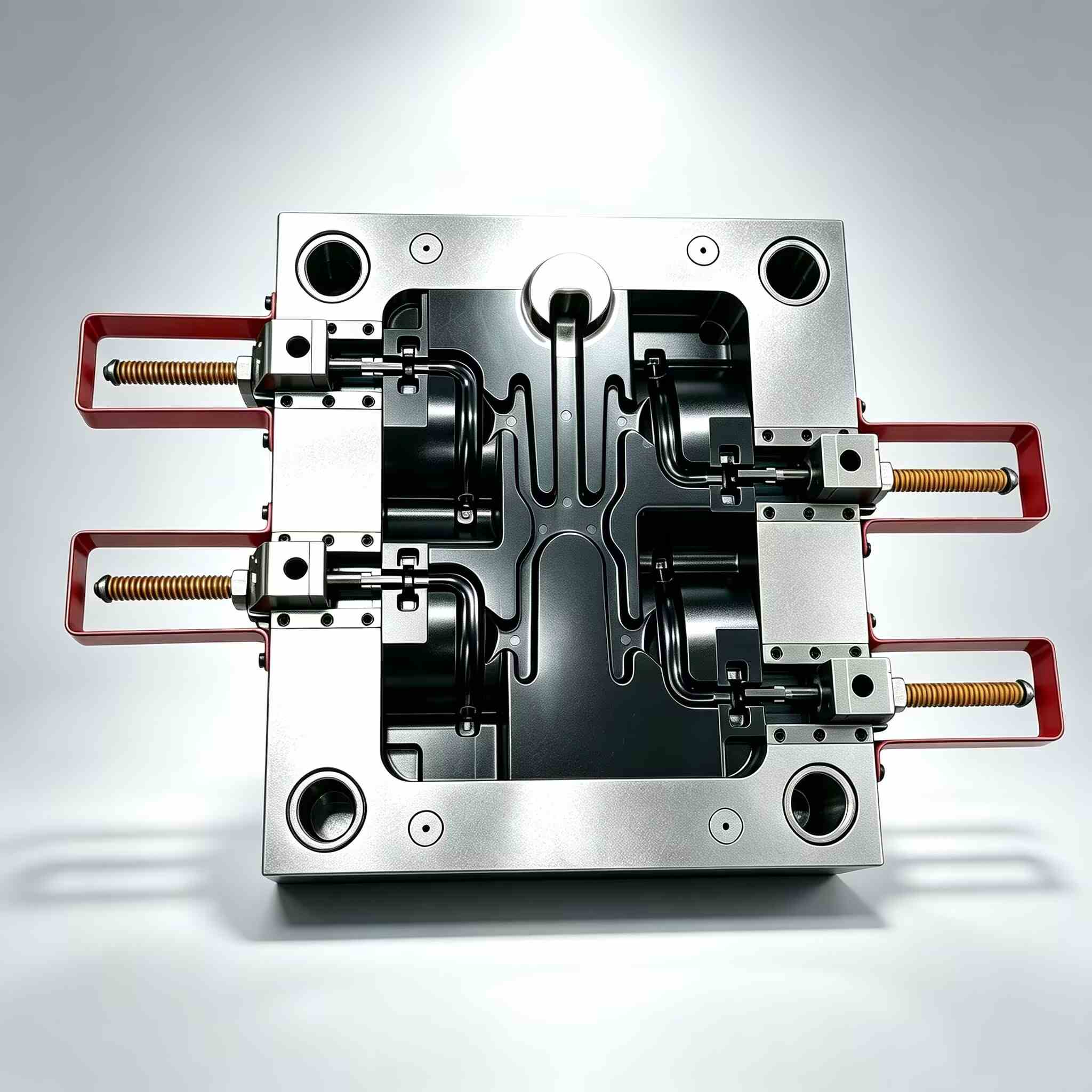
Le cœur d'un moule à dévisser réside dans son mécanisme d'entraînement. Il n'existe pas de solution universelle.
Système à crémaillère et pignon : Pour les mouvements synchronisés à grande vitesse, nous concevons souvent un système à crémaillère et pignon entraîné par la course d’ouverture du moule. Il est purement mécanique et incroyablement rapide.
Moteurs hydrauliques ou électriques : lorsque le filetage est trop long ou nécessite plusieurs rotations, nous intégrons des moteurs de précision.
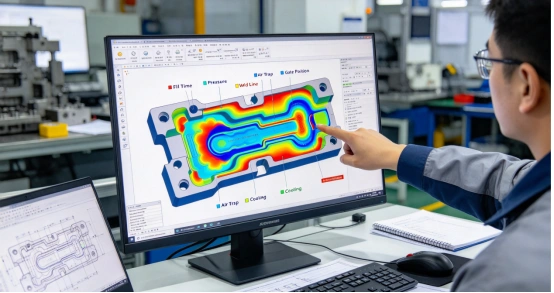
Le secret que Xinkey a découvert en plus de 25 ans ? La synchronisation. Si le noyau ne recule pas exactement à la même vitesse que le pas de filetage, le filetage en plastique sera endommagé avant même que la pièce ne quitte le moule. Nos concepteurs utilisent la simulation 3D pour modéliser ce rapport « course/rotation » au micron près.
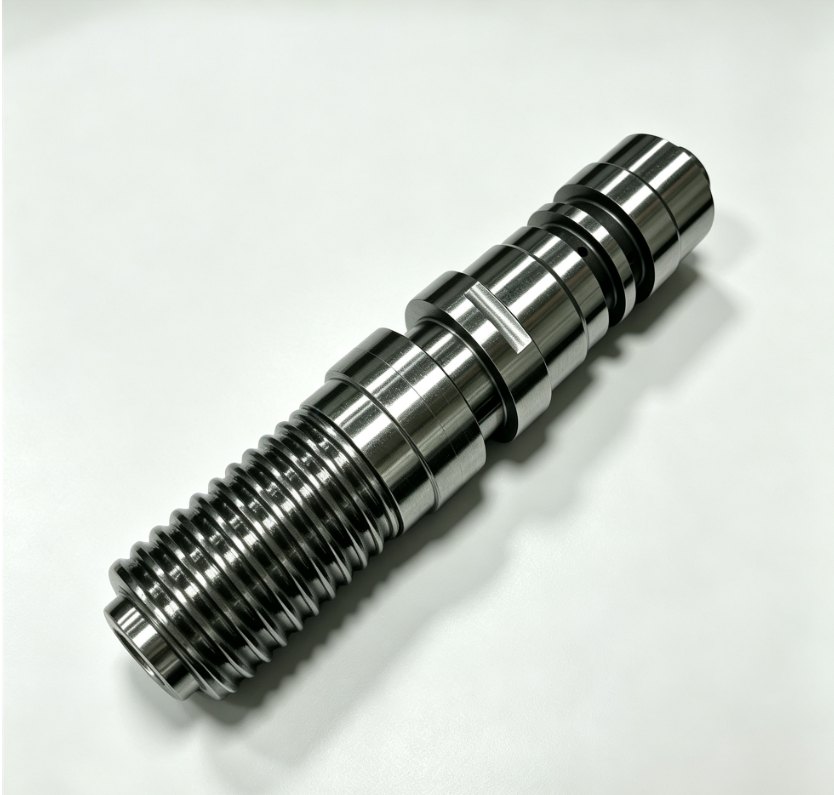
Les noyaux filetés tournent constamment contre la cavité du moule. Cela crée une friction et une chaleur importantes. Les ateliers de moulage classiques sont souvent confrontés à un grippage (blocage métal sur métal) après seulement quelques milliers d'injections.
Nous résolvons ce problème en choisissant le moule adapté. Nous utilisons de l'acier trempé H13 ou S136 pour les noyaux rotatifs, souvent traités avec des revêtements spéciaux à faible friction (comme le DLC). De plus, nous concevons des canaux de refroidissement internes au sein du noyau rotatif – une prouesse d'ingénierie de haut niveau qui garantit une prise rapide du plastique et des filetages nets, injection après injection.
Il arrive fréquemment que des clients viennent nous voir après avoir acheté ailleurs un moule à dévisser manuel moins cher. Ils ont économisé 5 000 $ sur l'outil, mais dépensent 2 000 $ par mois en main-d'œuvre et en pièces détachées.
Un moule à dévissage automatique Xinkey peut représenter un investissement initial plus important, mais il élimine toute intervention manuelle. En réduisant le temps de cycle de 5 secondes et en supprimant le besoin d'un opérateur humain, le moule est généralement rentabilisé en quelques mois de production.
L'avantage Xinkey
Lorsque vous nous envoyez un fichier 3D pour une pièce filetée, nos 22 concepteurs ne se contentent pas d'examiner la forme. Ils analysent également le pas, le retrait de matière et le temps de cycle. Nous concevons des outillages qui vous permettent de lancer la production en continu, 24 h/24 et 7 j/7, sans plus attendre.
Articles connexes



Nous contacter